OpenAI's GPT-5 router rollback shows why AI requires unlearning old habits


Key Points
- OpenAI has removed the model router for both free and $5 ChatGPT subscription users.
- All requests will now be handled by GPT-5.2 Instant, which is the fastest and most cost-effective model available.
- The previous router setup caused a drop in daily user engagement, as the more advanced reasoning models often delivered much slower responses.
People have been trained to expect that faster means better. With AI, the opposite is often true. OpenAI is now rolling back its GPT-5 router. But the company should be educating users instead.
OpenAI has quietly removed a core ChatGPT feature from hundreds of millions of users, according to WIRED. The model router, which automatically directed queries to the right AI model, is no longer available to free users or those on the $5 subscription. These users will now get responses from GPT-5.2 Instant by default—the fastest and cheapest model in the new series.
The move exposes a fundamental tension in the AI industry: the most powerful reasoning models are slow, often taking several minutes before answering, and most users don't want to wait. That's likely why OpenAI already added an "Answer now" button that cuts off the model's thinking process for an immediate response. This only really makes sense for engagement metrics. Anyone who wants quality answers should skip that button entirely.

Users choose speed over smarter answers
OpenAI launched the model router just four months ago alongside GPT-5. The system analyzed incoming queries and automatically picked whether to use a fast, cheap model or a slower but more capable reasoning model. The router was supposed to replace the increasingly cluttered model selection menu and always serve users the best option.
Most users don't even know that different AI models exist with different capabilities. And even those who do often can't tell which model fits which type of question. A router could cut through that complexity - something OpenAI had explicitly aimed for when designing GPT-5.
But the experiment didn't pan out. According to a source familiar with the situation, the router hurt daily active user numbers because reasoning models can take minutes to work through complex questions. Daily active users is a key success metric for OpenAI.
Routing to better models proved expensive
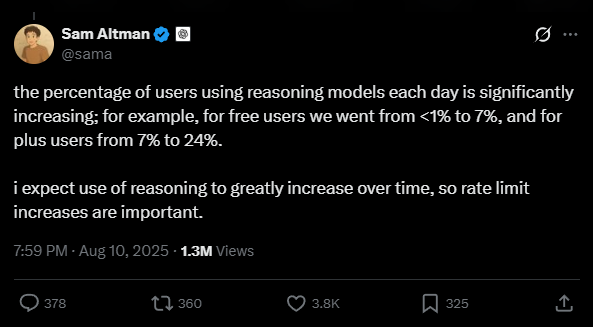
There's another factor at play: routing more queries to expensive models costs OpenAI money, and the AI company is already burning through cash at a staggering rate. Shortly after launch, Altman said the router had boosted reasoning model usage among free users from under one percent to seven percent, and from seven percent to 24 percent for Plus subscribers.
OpenAI told WIRED that user feedback showed free and Go subscribers prefer the standard chat experience. Reasoning models are still available but require manual selection. The router stays active for paying Plus and Pro subscribers. OpenAI says it may bring the feature back for free users once the technology improves.
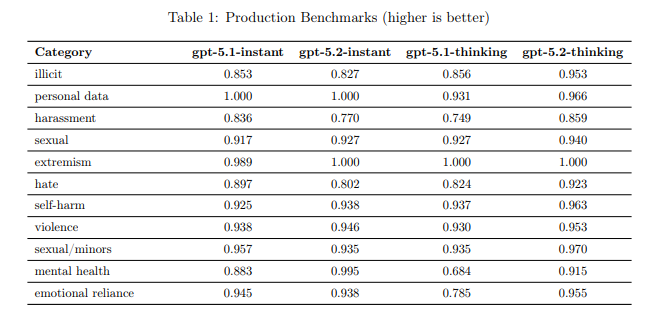
The rollback also removes a safety feature: the router had been forwarding signs of psychological distress to models designed to handle those situations. OpenAI says GPT-5.2 Instant now scores better on safety benchmarks, justifying the change.
AI News Without the Hype – Curated by Humans
As a THE DECODER subscriber, you get ad-free reading, our weekly AI newsletter, the exclusive "AI Radar" Frontier Report 6× per year, access to comments, and our complete archive.
Subscribe now