Anthropic cuts off third-party tools like OpenClaw for Claude subscribers, citing unsustainable demand

Key Points
- Starting April 5, 2026, Anthropic will restrict access to Claude through third-party tools like OpenClaw for subscription customers, requiring them to either purchase additional usage packages or use an API key to continue.
- As a goodwill gesture, affected subscribers will receive a one-time credit equal to their monthly subscription price to offset the change.
- The move highlights a fundamental tension in the AI industry: flat-rate subscription models and the heavy, continuous usage driven by agent-based third-party tools are fundamentally incompatible under current pricing structures.
Anthropic is cutting off Claude usage through external tools like OpenClaw for subscription customers. The decision exposes a core problem in the AI industry: flat-rate pricing and agent-driven nonstop usage don't mix.
Anthropic's Claude Code creator Boris Cherny announced that starting April 5, 2026 (12pm PT, 9pm CEST), Claude subscriptions will no longer cover usage through third-party tools like OpenClaw. Users can still log in with their Claude credentials, but they'll need to either buy additional usage packages or use a Claude API key.
The reason, according to Cherny, is capacity. "We've been working hard to meet the increase in demand for Claude, and our subscriptions weren't built for the usage patterns of these third-party tools," he writes on X. The company wants to "manage thoughtfully" and is prioritizing customers who use its own products and API.
To ease the transition, subscribers get a one-time credit equal to their monthly plan price and discounted usage packages. Full refunds are also available via email.
Cherny framed the decision as a strategic call. "We want to be intentional in managing our growth to continue to serve our customers sustainably long-term. This change is a step toward that," Cherny wrote.
Flat-rate AI subscriptions can't keep up with agent-driven usage
Behind the move is a fundamental tension in the AI industry, and Anthropic is likely the first to feel it. Subscription models assume average usage patterns, but agent systems that hammer Claude with requests around the clock through third-party tools blow that math apart. Put simply, OpenClaw is like a sumo wrestler at an all-you-can-eat buffet.
The decision also plays into a bigger debate about how AI providers relate to the third-party tool ecosystem. As models get more capable and pricier to run, providers face growing pressure to control usage and steer it back to their own products.
Steinberger says Anthropic copied features, then locked out the competition
OpenClaw inventor Peter Steinberger fired back at the announcement. He and investor Dave Morin tried to talk Anthropic out of it, but the best they got was a one-week delay, Steinberger wrote on X.
His accusation: Anthropic first absorbed popular features from his software into its own closed system, then shut out open-source alternatives. "Funny how timings match up," he commented.
Steinberger did add some nuance, though. He called the move "sad for the ecosystem" but gave Cherny credit for softening the blow. He also announced that the latest OpenClaw release includes improvements for more efficient cache usage, which should lower costs for users who now have to fall back on the API. The improvements actually come from Cherny himself, a gesture meant to show that Anthropic still supports open source.
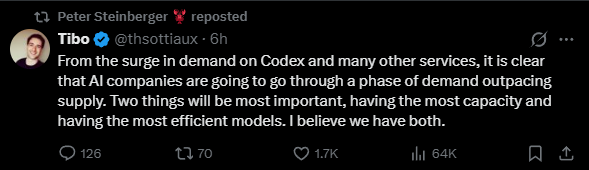
Steinberger's criticism might be jumping the gun, though. He notes that other providers, including Chinese companies and OpenAI, where he now works, still support OpenClaw. But Anthropic likely handles the bulk of OpenClaw traffic because it currently ships the strongest models on the market, and Steinberger himself built the software around Claude when he first released it.
His anti-open-source charge also comes with some baggage: Anthropic previously lawyered up and forced him to drop the original name of his software, "OpenClawd," a nod to Anthropic's "Claude" that sounded a bit too close for comfort. Whether OpenAI can hold its pricing if it faces a similar flood of demand for comparable models is another question entirely. "We're working on it," Steinberger says.
AI News Without the Hype – Curated by Humans
As a THE DECODER subscriber, you get ad-free reading, our weekly AI newsletter, the exclusive "AI Radar" Frontier Report 6× per year, access to comments, and our complete archive.
Subscribe now