Boston Dynamics unveils production Atlas designed for warehouses and factory floors

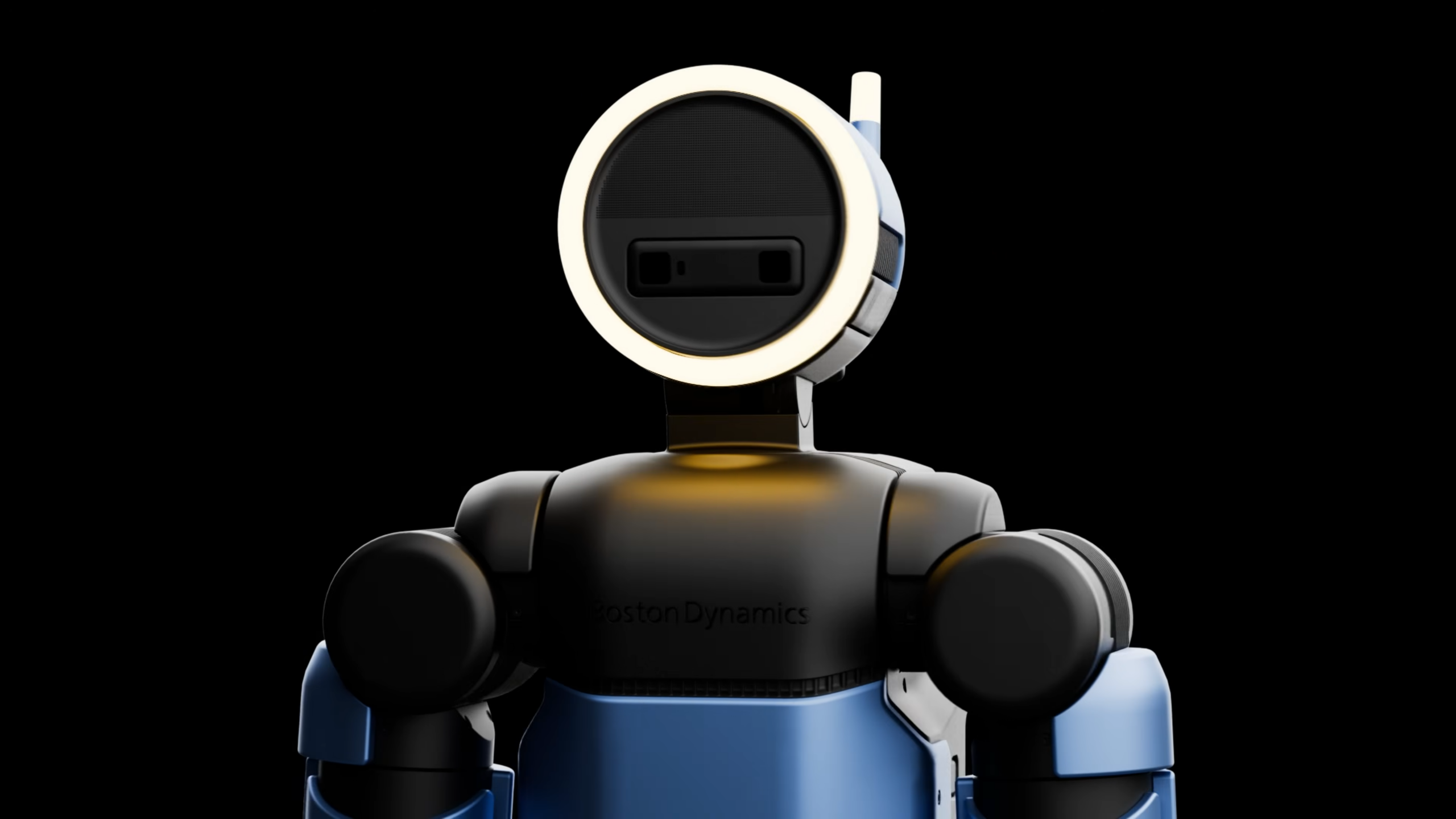
Key Points
- Boston Dynamics has unveiled the commercial version of its humanoid robot Atlas, standing 1.9 meters tall with a 2.3-meter reach, 30 kilograms of lifting force, and four hours of battery life.
- Hyundai, which owns 88 percent of Boston Dynamics, will be the first customer to receive a fleet of Atlas robots in 2026, with plans to build a factory capable of producing thousands of units per year.
- Rather than relying on manual programming, Atlas learns through VR headsets, motion capture suits, and simulations, representing a shift in how humanoid robots are trained for real-world tasks.
After years of research, Boston Dynamics is bringing Atlas to market, though the first customer is parent company Hyundai, which owns 88 percent of the robotics firm.
In October 2025, Boston Dynamics tested a research model (1.75 meters tall, 90 kilograms) at a Hyundai factory in Georgia. The robot independently sorted roof racks for the assembly line, CBS News reports. The production version now unveiled is larger and built for continuous commercial use.
Production model designed for warehouses and factory floors
The new Atlas stands 1.9 meters tall with a 2.3-meter reach. It runs on electric power, uses Nvidia chips, and can repeatedly lift 30 kilograms in temperatures from -20 to 40 degrees Celsius. Battery life is about four hours, and Atlas can swap its own batteries in under three minutes. All limbs can be replaced in under five minutes.
Hyundai, which owns 88 percent of Boston Dynamics, will be the first customer. A fleet is scheduled for delivery to the Robotics Metaplant Application Center (RMAC) in 2026, and Hyundai is building a new robotics factory capable of producing thousands of robots per year.
Boston Dynamics says most customers should see a return on investment within two years. CEO Robert Playter expects robots to take over heavy, repetitive work, though he says it could be years before they actually replace human workers, and even then, people will still be needed to manage and maintain the machines.
Atlas learns through VR headsets and motion capture suits
Humans are also essential for training. Instead of manual programming, Atlas learns through machine learning. Employees guide the robot through tasks using VR headsets or wear motion capture suits, and Atlas picks up their movement data. Thousands of digital copies also train simultaneously in simulations until the system finds the best approach. Boston Dynamics is working with Google Deepmind and the Toyota Research Institute on research and development.
AI News Without the Hype – Curated by Humans
As a THE DECODER subscriber, you get ad-free reading, our weekly AI newsletter, the exclusive "AI Radar" Frontier Report 6× per year, access to comments, and our complete archive.
Subscribe now