OpenAI decides the best way to fight critical AI coverage is to own a newsroom

Key Points
- OpenAI has acquired TBPN, a tech talk show that has been conducting daily interviews with prominent figures in the tech industry since October 2024.
- According to OpenAI's Head of Applications Fidji Simo, TBPN will maintain editorial independence but also serve marketing and communication purposes, reporting to OpenAI's Head of Communications Chris Lehane. The show's previous advertising business will be shut down.
- The acquisition may be a strategic move to shape the public narrative around AI, as surveys indicate a poor public perception of the technology, something Silicon Valley has reportedly partly attributed to traditional media coverage.
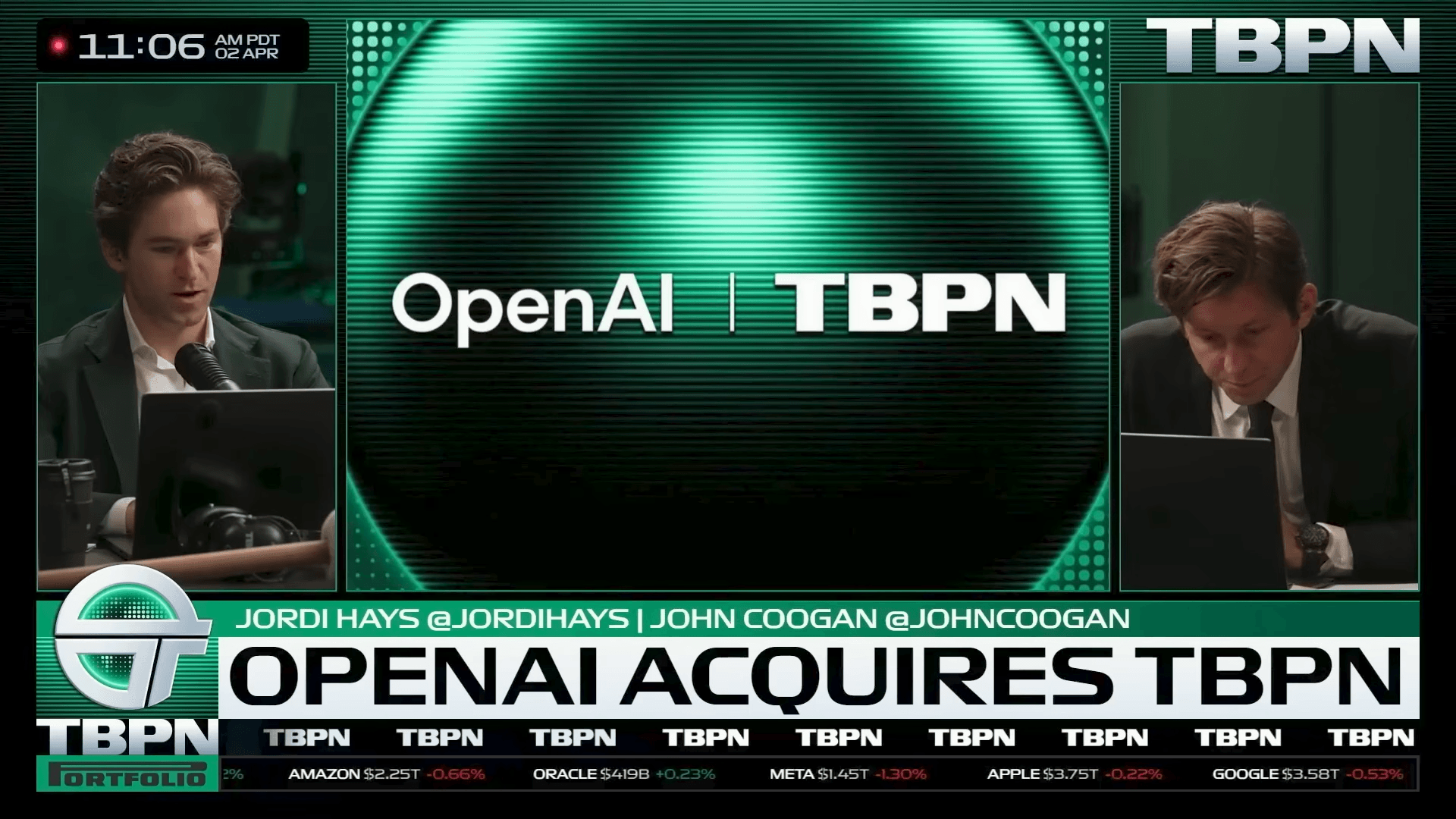
OpenAI has acquired the online talk show TBPN, which has been covering tech news and interviewing industry leaders since October 2024.
The purchase price was not disclosed. TBPN broadcasts daily and focuses on interviews with big names in tech. Episodes typically run between 20 and 60 minutes and pull low four- to five-digit view counts on YouTube.
According to the Wall Street Journal, the show averages around 70,000 viewers per episode "across various online platforms" and brought in roughly 5 million dollars in ad revenue in 2025. The eleven-person team expects revenue to top 30 million dollars in 2026.
TBPN will be "editorially independent," but report to OpenAI's comms chief
According to OpenAI's Head of Applications Fidji Simo, TBPN will remain editorially independent while also helping with marketing and communications. The show's ad business will be shut down. TBPN will report to OpenAI's head of communications, Chris Lehane, but keep control over programming, guests, and content.
The promises contradict each other. A media outlet that reports to a company's comms department isn't independent, no matter how much editorial freedom it's initially granted. OpenAI pays the salaries, sets the structure, and can replace staff at any time. You can't promise integration into corporate comms and free reporting at the same time.
Simo justifies the acquisition by saying the usual communications playbook doesn't fit OpenAI and that they want to foster a "real, constructive conversation" about AI. But OpenAI could do that as a sponsor, or even with similar formats of its own. Instead, they're buying the whole thing outright.
OpenAI—a company that draws more public criticism than arguably any other AI player—is probably the worst possible owner for a media outlet that claims to operate independently. "I don't expect them to go any easier on us, am sure I'll do my part to help enable that with occasional stupid decisions," writes OpenAI CEO Sam Altman.
It seems self-deprecating, but it doesn't answer the obvious question: if OpenAI doesn't want to influence coverage, why buy the show? It's not about the money; the ad revenue is being cut, and it wouldn't even be pocket change for OpenAI anyway.
The real play is shaping public opinion on AI
The motivation behind the purchase is probably less about OpenAI specifically and more about AI as a whole. Media companies cover topics from all angles, opportunities, and risks alike, and often lean harder on the risks. Surveys show that while AI usage is high, public trust is low. According to the WSJ, Silicon Valley puts at least part of the blame on traditional media.
Simo's own framing backs this up. She ties her call for "a real, constructive conversation about the changes AI creates" directly to OpenAI's mission to "ensure artificial general intelligence benefits all of humanity." That says two things: this conversation isn't happening elsewhere—at least not the way OpenAI wants—and OpenAI feels it needs to step in.
Read that way, OpenAI bought a group of influencers who deliver coverage in the strangely bland style of classic US news channels to steer the public narrative on AI in its favor. Lobbying dressed up as journalism—another safe space like Joe Rogan's or Lex Fridman's podcasts, where tech giants get to share their theories on the future of humanity without any real pushback, theories that often serve their own bottom line.
Or maybe it's simpler than that: TBPN host John Coogan writes on X that he's worked with Altman for over a decade. Altman funded his first company back in 2013. Perhaps the whole deal is just a favor between old friends.
AI News Without the Hype – Curated by Humans
As a THE DECODER subscriber, you get ad-free reading, our weekly AI newsletter, the exclusive "AI Radar" Frontier Report 6× per year, access to comments, and our complete archive.
Subscribe now