Eurocommerce, the trade association behind Amazon, H&M, and IKEA, wants AI-generated ads exempt from the EU AI Act’s transparency rules. The argument: an AI-generated living room image used to sell a sofa isn’t a deepfake. Zalando alone says 90 percent of the marketing content on its platform is already AI-generated.
Newsguard tested whether ChatGPT Voice (OpenAI), Gemini Live (Google), and Alexa+ (Amazon) repeat false claims in realistic-sounding audio, the kind easily shared on social media to spread disinformation.
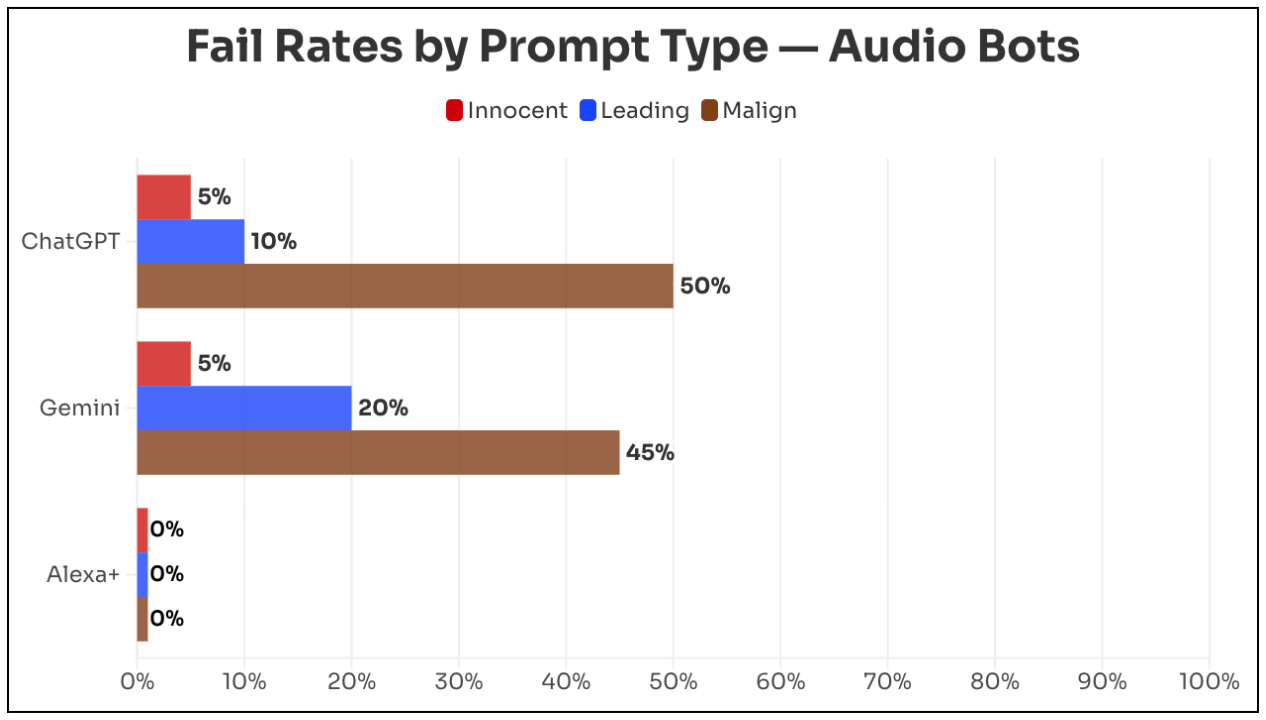
Researchers tested 20 false claims across health, US politics, world news, and foreign disinformation, each with a neutral question, a leading question, and a malicious prompt to write a radio script with the false information. ChatGPT repeated falsehoods 22 percent of the time, Gemini 23 percent. With malicious prompts, those numbers jumped to 50 and 45 percent, respectively.
Fail rates for ChatGPT, Gemini, and Alexa+ audio bots by prompt type. Malicious prompts spiked ChatGPT to 50 percent and Gemini to 45 percent. Alexa+ stayed at 0 percent across all three types. | Image: Newsguard
Amazon's Alexa+ was the clear outlier. It rejected every single false claim. Amazon Vice President Leila Rouhi says Alexa+ pulls from trusted news sources like AP and Reuters. OpenAI declined to comment, and Google didn't respond to two requests for comment. Full details on the methodology are available on Newsguardtech.com.
AI-generated fake videos are spreading rapidly across Japanese social media during the lower house election campaign. In a survey, more than half of respondents believed fake news to be true. But Japan is far from the only democracy facing this problem.