OpenAI's chief scientist trusts AI with experiments but says it's not at the level to design complex systems

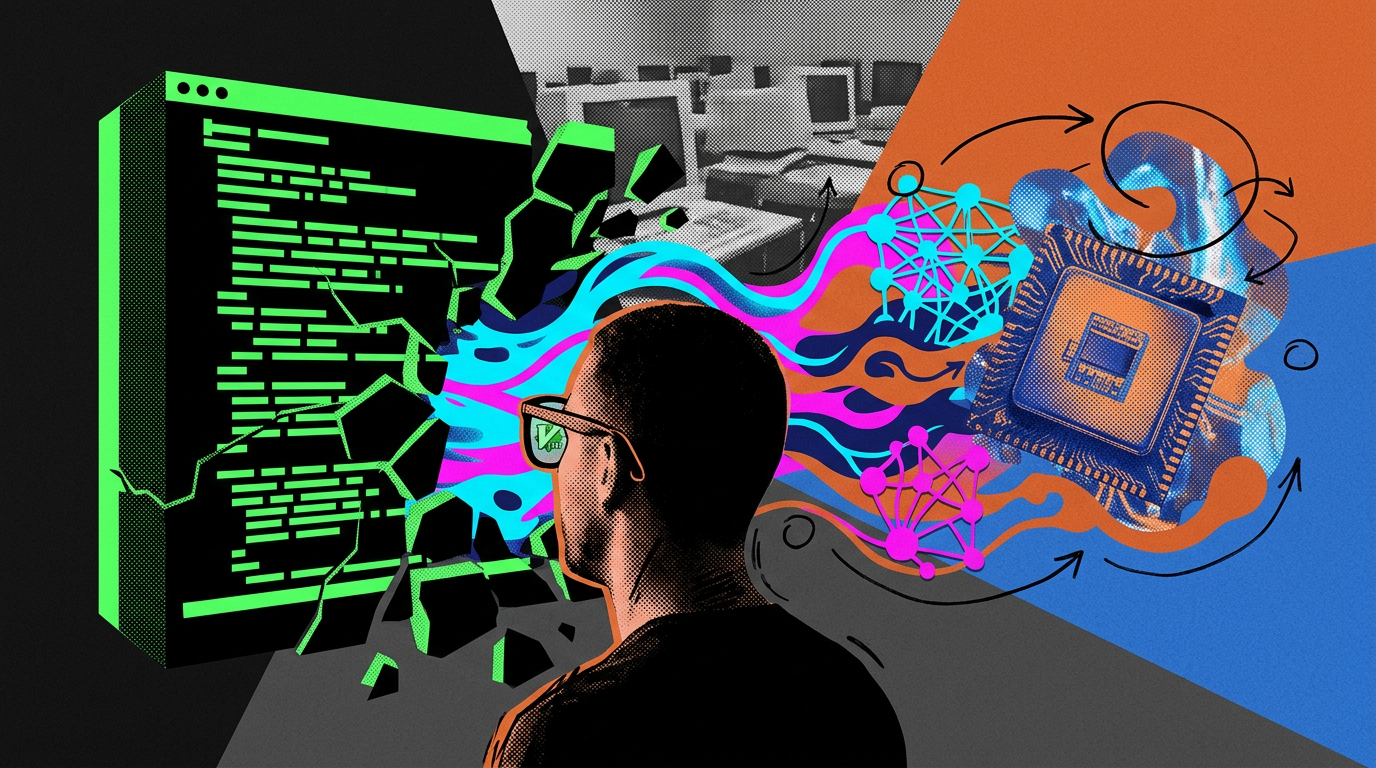
OpenAI Chief Scientist Jakub Pachocki used to write every line of code by hand. Now AI handles experiments that once took him a week, but he's not ready to let it run the show.
Just a year ago, Pachocki didn't even use autocomplete. He preferred working in the code text editor Vim, typing everything out himself. "I'm very pedantic about my code," he tells MIT Technology Review.
The latest models won him over. Experiments that used to eat up a full week of coding now get done by AI over a single weekend. "That's hard to argue with," he says. Still, Pachocki draws a line at complex design work. "I don't think it's at the level where I would just let it take the reins and design the whole thing."
He's also quick to point out that AI tools aren't a silver bullet for every developer; how useful they are depends on the person and the task. His goal now is to keep pushing the problem-solving capabilities of tools like Codex and bring them into new scientific fields.
OpenAI's path toward fully autonomous AI research
Pachocki's main focus right now is the autonomous AI research intern OpenAI announced last fall, "a system that you can delegate tasks to that would take a person a few days." It's set to ship in September. By March 2028, the company plans to have a full "AI Researcher": a multi-agent system that can independently tackle complex problems across math, physics, biology, chemistry, and even economics and politics.
"Of course, you still want people in charge and setting the goals. But I think we will get to a point where you kind of have a whole research lab in a data center," Pachocki says. He sees this going well beyond research. Eventually, these data centers could take over the work of entire corporations like OpenAI or Google. Work that once required massive human organizations would be done by a handful of people. That kind of shift creates "extremely concentrated power that's in some ways unprecedented," Pachocki says.
AI News Without the Hype – Curated by Humans
As a THE DECODER subscriber, you get ad-free reading, our weekly AI newsletter, the exclusive "AI Radar" Frontier Report 6× per year, access to comments, and our complete archive.
Subscribe now