
AI graphics are arriving in everyday life. A current debate shows that there is still much need for clarification - legally, ethically and emotionally.
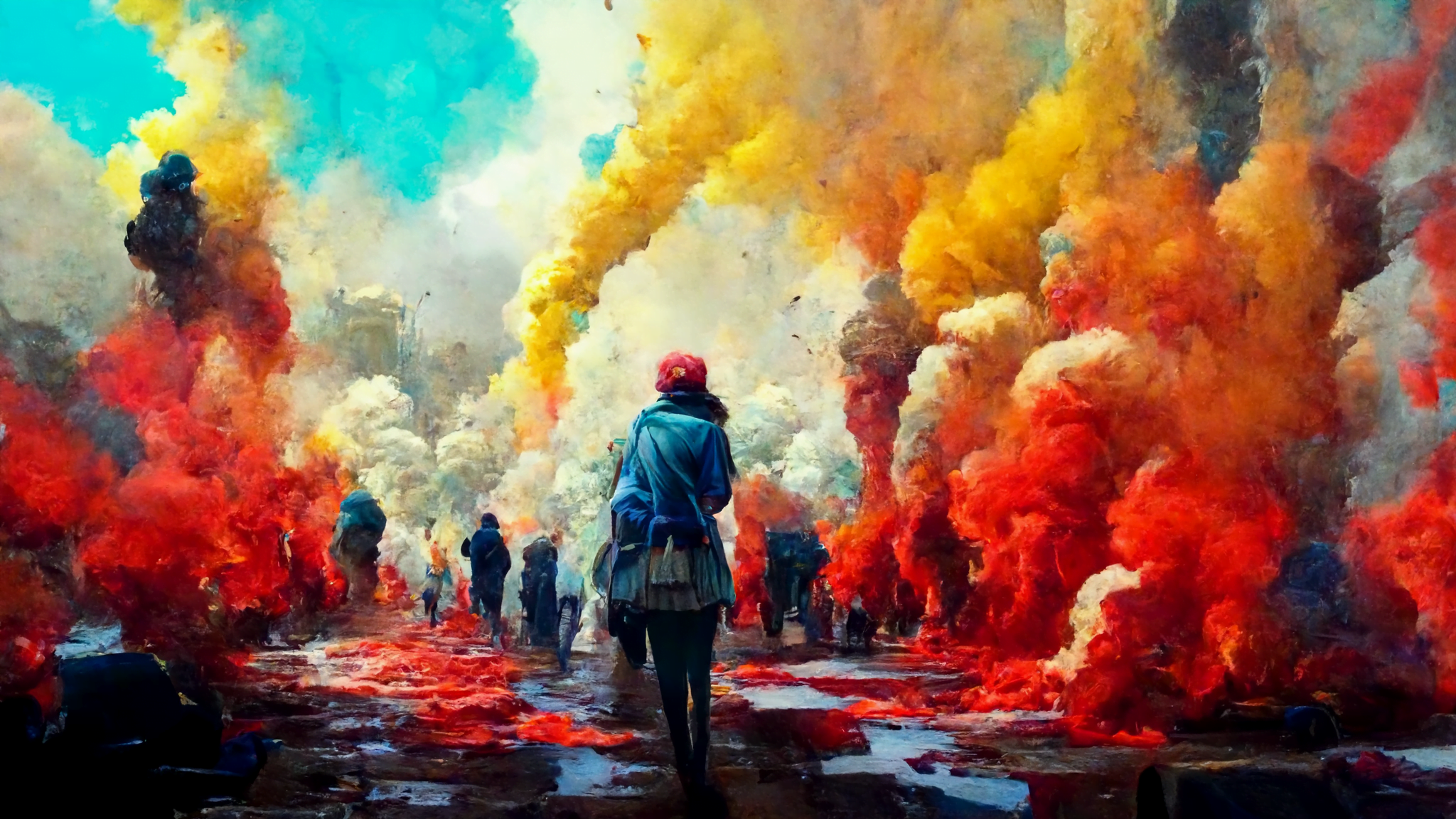
AI graphics tools like Midjourney and DALL-E 2 are available to more and more people. They can and are also used commercially.
Here, the tool is at least potentially (partially) replacing human labor: for example, Cosmopolitan magazine created a cover using AI, and recently a writer for The Atlantic used a Midjourney-generated image in an article. That prompted protests on Twitter.
AI illustration replaces stock photo - and artists are appalled
Author Charlie Warzel used a Midjourney-illustrated graphic depicting U.S. radio host Alex Jones in his newsletter for the well-known national U.S. media brand The Atlantic.
Since many media outlets covered Jones using a selection of a few stock photos from which Warzel would also have had to choose, the author wanted to differentiate himself visually in his newsletter. The AI-generated graphic, therefore, seemed like a suitable alternative to him.
This in turn angered artists and designers who noticed the AI graphics and protested on Twitter: If a well-known magazine like The Atlantic pays a computer instead of an artist for illustrations, this could serve as a blueprint for other publications to save on the design budget.
We all knew AI art would be used in this way eventually but to actually see it happen is really nasty. pic.twitter.com/qInIGZTUlU
- Adam Szym (@adamszym) August 10, 2022
Warzel did clarify that the AI illustration was his decision alone and that the alternative would have been merely widely available stock photos. However, Warzel was unable to stop Twitter's momentum: Protests against his AI image received hundreds of retweets and tens of thousands of likes.
"My open DMs were well stocked with people alternately calling me a piece of shit or asking why everyone on Twitter was calling me a piece of shit," Warzel writes.
Not every AI illustration replaces a human one
Behind the protests from the graphics community is, on the one hand, the fear of being replaced. OpenAI founder Sam Altman, one of the brains behind DALL-E 2, said at the beta launch of the image engine that it would probably take over human creative jobs and change the job market.
There is additional anger in the protests because systems like DALL-E 2 or Midjourney are trained with images from the Internet. These images, in turn, were largely created by human artists.
One thesis is that artists have a fundamental licensing claim against AI-generated images because their art could be proportionately included in any AI image. A similar debate is taking place among programmers in the context of AI code generators. So far, there is no consensus.
In any case, Warzel apologizes to the design community and says he didn't consider the "complicated ethical issues" before deciding on the AI illustration but was simply following a selfish desire to visually set his newsletter apart from the rest of the Jones coverage.
Since, among other things, he would rather not help steer developments in one direction, he would largely do without AI graphics in the future - even if a human were not automatically commissioned instead of the AI.
"Like others, I also have questions about the corpus used to train these art tools and the possibility that they are using a great deal of art from both big-name and lesser-known artists without any compensation or disclosure to those artists," Warzel writes.