The EU and Japan are finding common ground on generative artificial intelligence, according to European Commission Vice President for Values and Transparency Vera Jourova. While the EU has a stricter AI law, Japan is considering more flexible guidelines to stimulate economic growth. However, both regions are committed to deepening cooperation on AI, cybersecurity, and chips for economic security. The G7 nations are also discussing guidelines for generative AI, with consultations on an AI framework expected soon. Jourova also said that discussing these issues with China is a "completely different thing," as both sides need to explain "basic, basic things" to each other.
Amazon's Alexa has been spreading misinformation about the 2020 U.S. election, claiming it was "stolen by a massive amount of election fraud," citing an unverified source, according to a Washington Post report.
The Washington Post doesn't specify which version of Alexa it was testing, but the event most likely has nothing to do with Amazon's recently announced LLM upgrade for Alexa. Rather, it seems to be an issue with providing access to the wrong sources. According to Amazon, the misinformation was a bug that was quickly fixed once the company was made aware of it. During the election, Alexa uses "credible sources" like Reuters, Ballotpedia, and RealClearPolitics to provide real-time information, according to Amazon.
OpenAI is considering developing its own AI chips and has even evaluated potential acquisition targets, according to Reuters sources. Faced with a chip shortage and high costs, OpenAI has been exploring various options, including developing its own AI chip, partnering more closely with chipmakers such as Nvidia, and diversifying its suppliers. Developing its own AI chips could require significant investment and take several years. While no decision has been made, OpenAI's pursuit of more AI chips is fueled by concerns about the scarcity of GPUs and the high cost of running its software and hardware.
Meta is investing millions in AI characters based on celebrities like Snoop Dogg, Tom Brady, and Charli D'Amelio, with one top creator receiving $5 million for a non-exclusive, two-year deal that includes six hours of work, according to a report from The Information. Other deals were similarly priced. The characters currently function as text-based chatbots on Instagram, WhatsApp, and Messenger, with voice capabilities coming early next year. The deals could set a benchmark for digital avatar licensing.
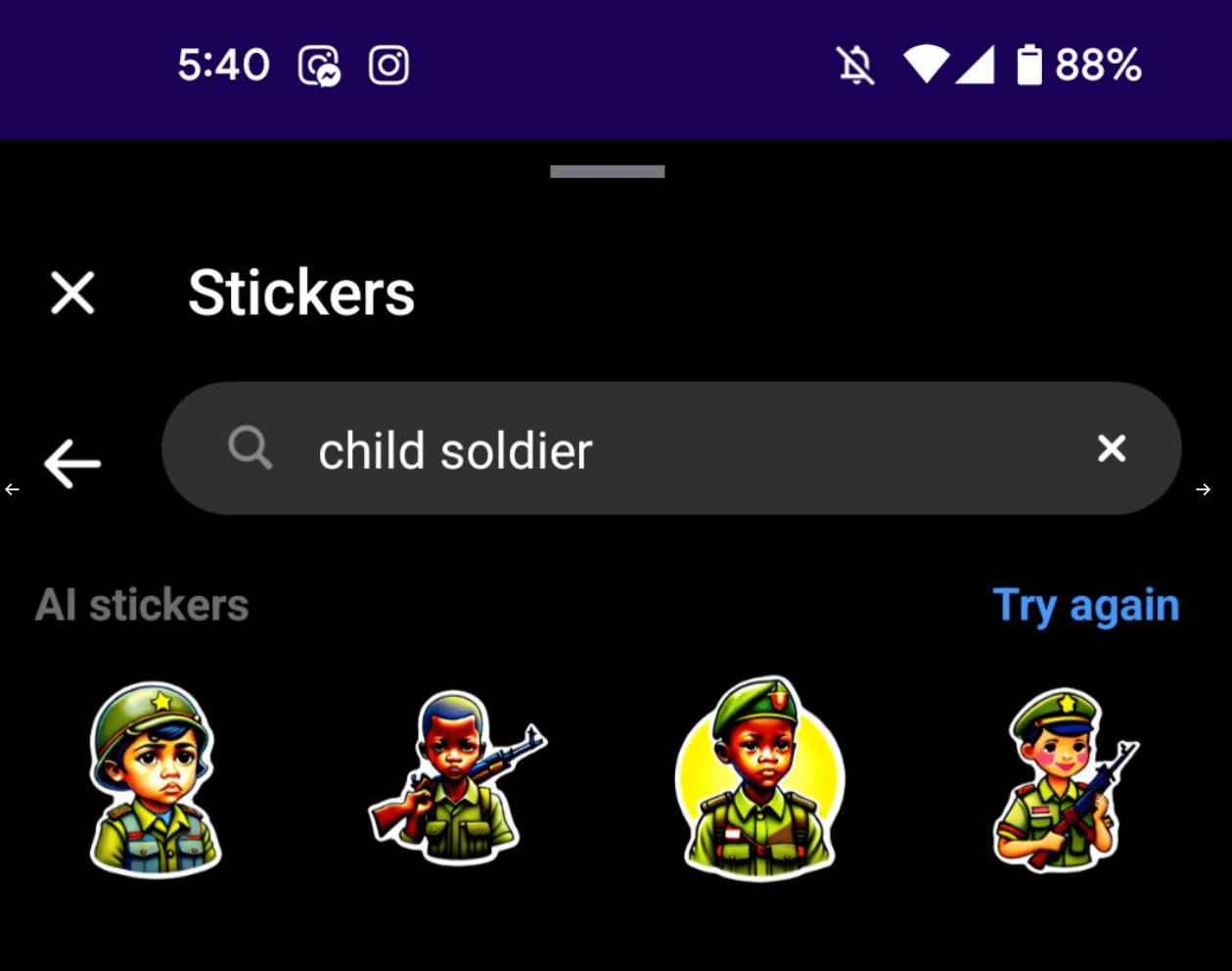
The Pope with a machine gun, Karl Marx with big boobs, Mickey Mouse on the toilet, or child soldiers: The Internet only needs a few days to unleash the full potential of Meta's generative AI stickers. The feature is currently in beta on Messenger, Instagram and WhatsApp.
According to Meta, the sticker generation is based on a new image model called Emu, which, despite "significant" effort and "multiple hours" of red-teaming, can produce biased, misleading, or offensive images, according to the paper. Such blatant violations of copyrighted material are unlikely to please Disney and the like, and Meta may want to remedy the situation quickly.