Copilot Health marks Microsoft's entry into the AI health race alongside OpenAI and Anthropic

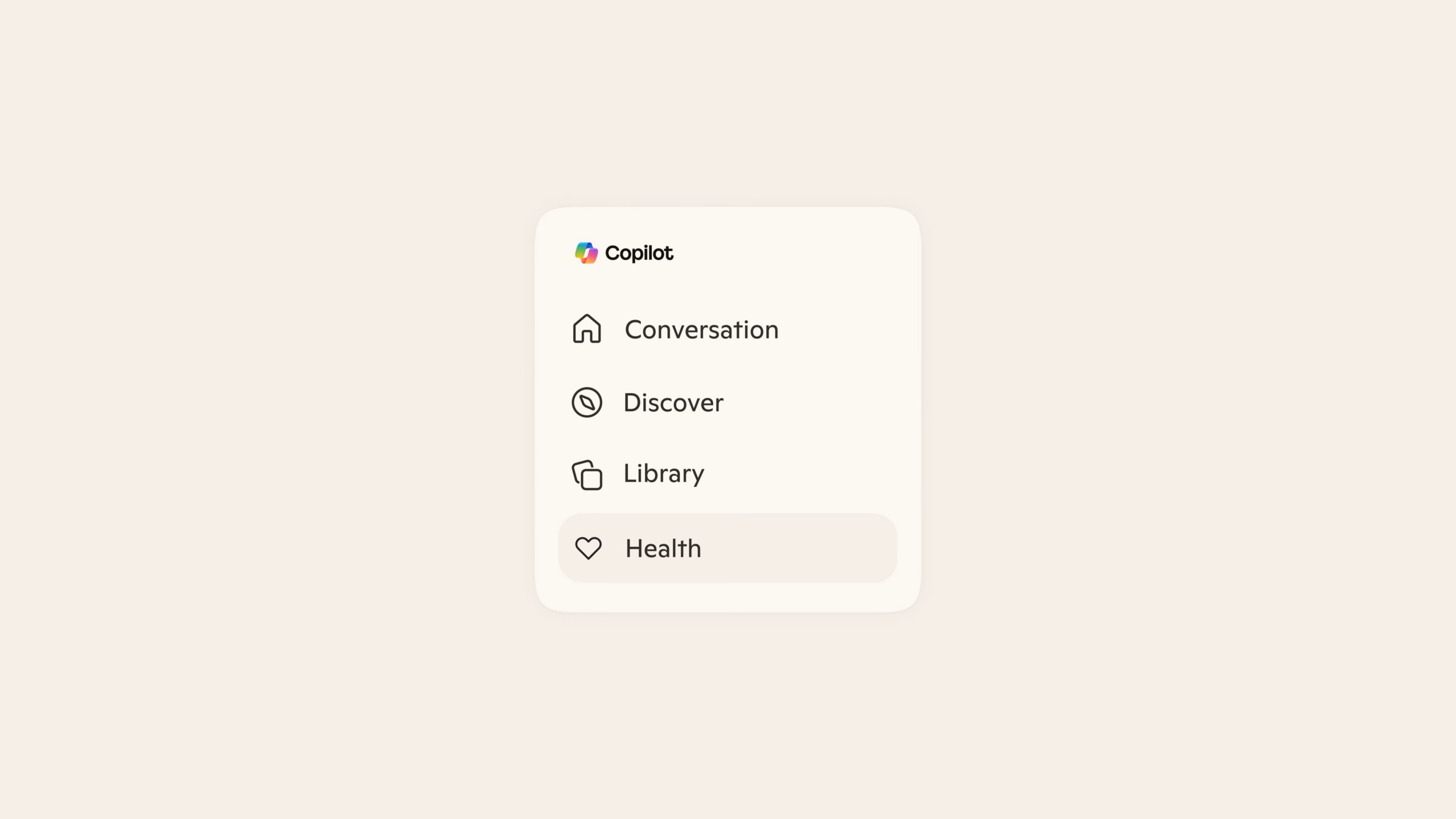
Microsoft is rolling out a dedicated health section inside its AI assistant Copilot.
The service pulls health data from more than 50 wearable devices—including Apple Health, Oura, and Fitbit—along with medical records from over 50,000 US hospitals and healthcare facilities and lab results, all in one place. The AI analyzes this data and delivers personalized health recommendations. Microsoft is clear that Copilot Health isn't meant to replace a doctor but to help patients show up better prepared for medical appointments.
Answers draw on verified sources from 50 countries, supplemented by Harvard Health content. Users can also search for doctors who accept their insurance, with filters for specialty, location, and language. Health data is stored encrypted and isn't used to train AI models. Users can disconnect data sources like medical records or wearables at any time and delete their data entirely.
Microsoft says an internal clinical team and over 230 doctors across more than 24 countries are supporting development. The service has also earned ISO/IEC 42001 certification, an international standard for AI management systems.
Copilot Health is launching first in the US, in English only, for adults on a waiting list. Down the road, Microsoft says it's aiming for "medical superintelligence:" health AI that combines the broad knowledge of a general practitioner with the deep expertise of a specialist. A research project called MAI-DxO is already showing "impressive results in research environments," according to the company.
Chatbots are turning into private diagnostic tools
OpenAI and Anthropic recently shipped their own chat services for medical topics. OpenAI said at the time that 260 doctors from 60 countries were involved in development, a number strikingly close to Microsoft's figures, suggesting the two products may be connected. Microsoft's announcement doesn't say which model powers Copilot Health, but OpenAI models are the most likely bet.
In May 2025, OpenAI published a study showing that its then-current models, o3 and GPT-4.1, outperformed doctors in simulated patient conversations in some cases. Users also report anecdotally that AI has helped them land diagnoses, especially for rare conditions.
AI News Without the Hype – Curated by Humans
As a THE DECODER subscriber, you get ad-free reading, our weekly AI newsletter, the exclusive "AI Radar" Frontier Report 6× per year, access to comments, and our complete archive.
Subscribe now