Hugging Face bets on open source to solve robotics' transparency problem

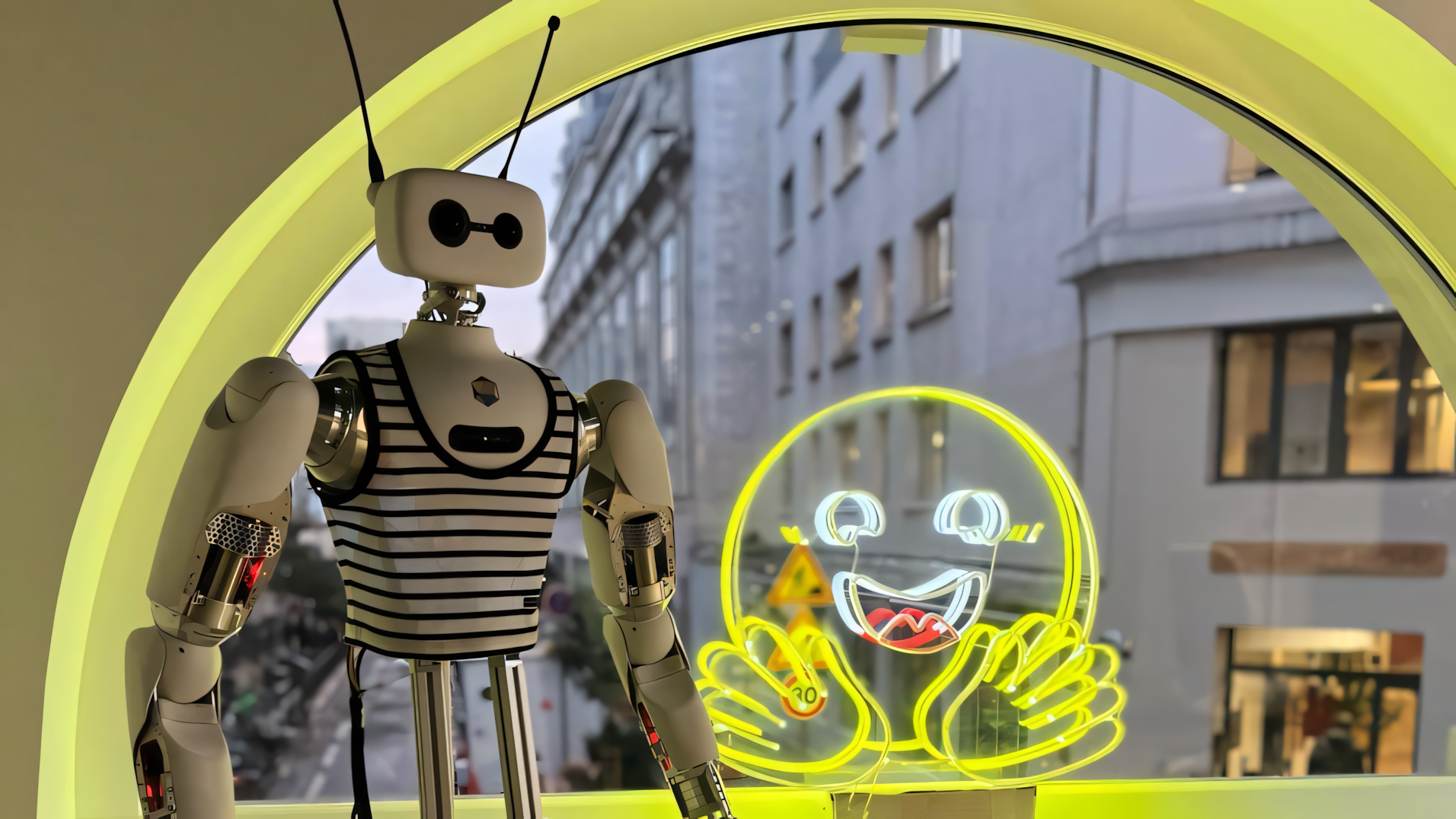
Hugging Face aims to make robotics more accessible through transparency and community-driven development.
Hugging Face, the open-source AI platform, has acquired French robotics startup Pollen Robotics. The deal includes Pollen’s humanoid robot Reachy 2, which the company plans to further develop as an open-source hardware and software platform. The initiative is intended to make robotics more accessible to developers, following the open model used widely in AI research.
According to CEO Clément Delangue, transparency is especially critical when dealing with physical systems. They see open-source frameworks—featuring publicly available code and hardware documentation—as a way to build trust and foster collaboration.
Super happy to announce that we are acquiring @pollenrobotics to bring open-source robots to the world! ?
Since @RemiCadene joined us from Tesla, we've become the most widely used software platform for open robotics thanks to @LeRobotHF and the Hugging Face Hub. Now, we're... pic.twitter.com/9PVLP2Nq1H
- Hugging Face (@huggingface) April 14, 2025
Reachy 2 is already being used by several AI companies in research settings. The robot is capable of performing basic tasks, such as picking up objects or clearing cups. Hugging Face plans to release detailed schematics, parts lists, and 3D models to enable developers to repair components or make their own modifications. The company expects this approach to accelerate innovation by lowering technical barriers.
Positioning open source as a response to industry challenges
Pollen CEO Matthieu Lapeyre views the acquisition as an opportunity to make robotics more practical and accessible. The market for humanoid robots remains difficult, with systems often prone to failure and many applications still undefined. The field is currently dominated by large, well-funded companies such as Tesla, Figure, and Agility Robotics. Hugging Face’s strategy is to offer a transparent, community-driven alternative.
The company also sees the open-source model as a counterbalance to inflated expectations in the robotics sector. Public videos of humanoid robots often depict highly capable machines, but many of these are staged under ideal conditions or remotely operated. Open access to hardware and software could ground the field in more realistic assessments of current capabilities, Delangue said.
AI News Without the Hype – Curated by Humans
As a THE DECODER subscriber, you get ad-free reading, our weekly AI newsletter, the exclusive "AI Radar" Frontier Report 6× per year, access to comments, and our complete archive.
Subscribe nowAI news without the hype
Curated by humans.
- More than 16% discount.
- Read without distractions – no Google ads.
- Access to comments and community discussions.
- Weekly AI newsletter.
- 6 times a year: “AI Radar” – deep dives on key AI topics.
- Up to 25 % off on KI Pro online events.
- Access to our full ten-year archive.
- Get the latest AI news from The Decoder.