OpenAI at 10: Altman sees superintelligence arriving by 2035

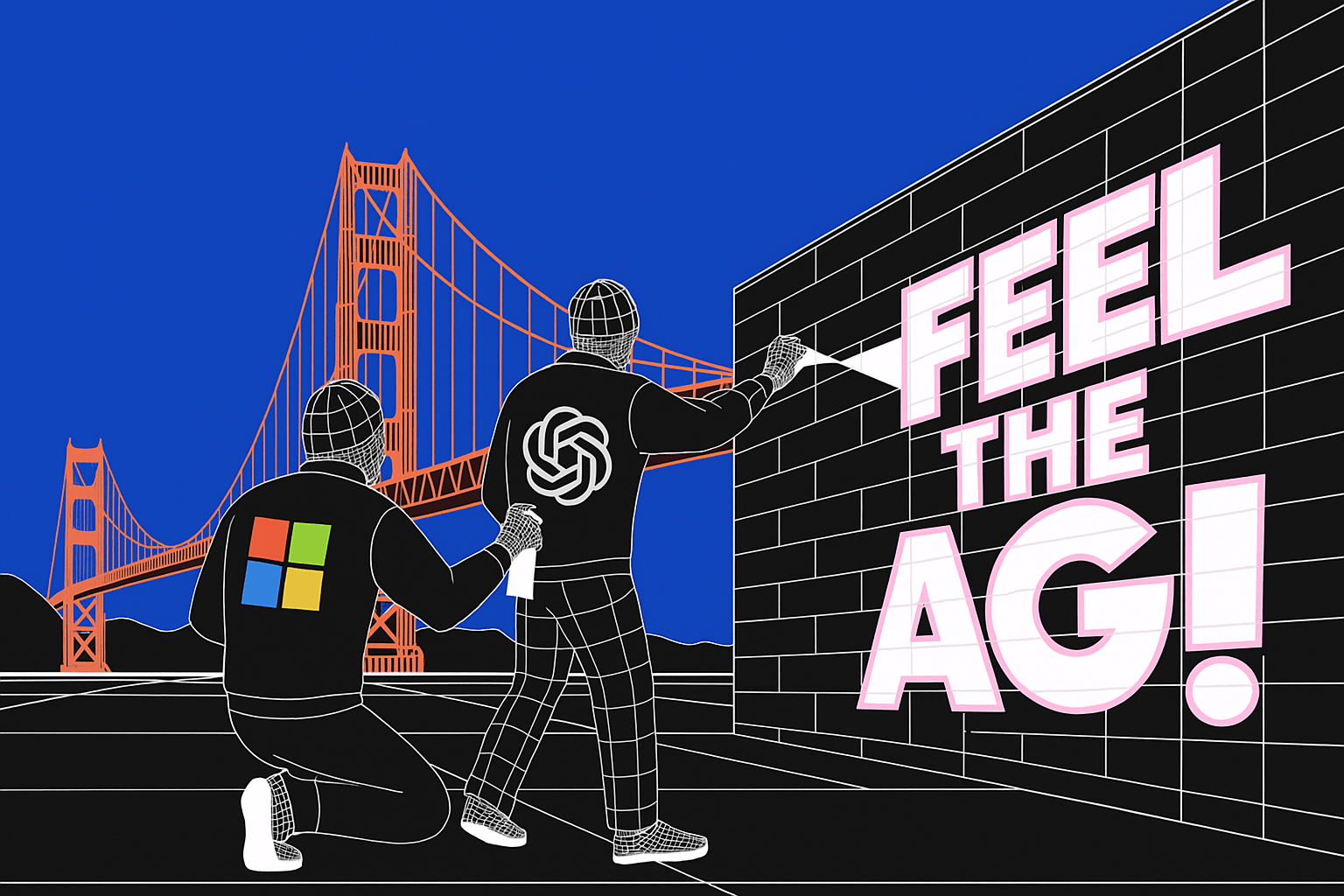
Sam Altman predicts superintelligence is likely within the decade.
Marking OpenAI's tenth anniversary, CEO Sam Altman predicts the company will likely build a superintelligence within the next ten years. His retrospective traces the company's path from its 2015 founding through milestones like the Dota AI Five, robotic hands, GPT models, and the eventual ChatGPT breakthrough.
In a blog post titled Ten Years, Altman outlines a somewhat paradoxical future. He suggests that while daily life and personal priorities will likely remain largely unchanged, technological capabilities will reach levels that are currently hard to fathom. Altman describes a future that might feel unfamiliar, where machine capabilities grow exponentially while human focus remains on interpersonal connection.
OpenAI's Dota bot made headlines six years ago, long before ChatGPT.
Looking back, Altman defends the strategy of iteratively releasing early AI versions. He argues this approach allows society and technology to co-evolve—a method he claims has become the industry standard. This references earlier debates about the delayed release of GPT-2 and the current practice of red-teaming models before launch.
From non-profit to billion-dollar company
OpenAI launched in 2015 as a nonprofit organization with a specific mission: to develop safe artificial general intelligence (AGI) for the benefit of humanity. Initially, the company focused on basic research and open publishing.
By 2019, the focus shifted toward large-scale language models. The GPT series became the company's core product line, and investor ties deepened—particularly through Microsoft's multi-billion dollar investment. This effectively turned OpenAI into a hybrid structure consisting of a nonprofit parent and a profit-oriented operating company.
Between 2024 and 2025, OpenAI initiated another strategic realignment. Late in 2024, the company announced plans to convert its for-profit arm into a "Public Benefit Corporation" (PBC)—a legal structure meant to balance profit generation with social good. Former executives like Miles Brundage and Jan Leike criticized the move, fearing it would dilute the original mission and turn OpenAI into a standard tech company.
In May 2025, OpenAI officially unveiled the new structure, confirming that the nonprofit entity would retain control. Following intense negotiations with Microsoft, the company finalized the reorganization by the end of the year.
AI News Without the Hype – Curated by Humans
As a THE DECODER subscriber, you get ad-free reading, our weekly AI newsletter, the exclusive "AI Radar" Frontier Report 6× per year, access to comments, and our complete archive.
Subscribe nowAI news without the hype
Curated by humans.
- Over 20 percent launch discount.
- Read without distractions – no Google ads.
- Access to comments and community discussions.
- Weekly AI newsletter.
- 6 times a year: “AI Radar” – deep dives on key AI topics.
- Up to 25 % off on KI Pro online events.
- Access to our full ten-year archive.
- Get the latest AI news from The Decoder.