US Copyright Office grants partial copyright for book written with ChatGPT's help

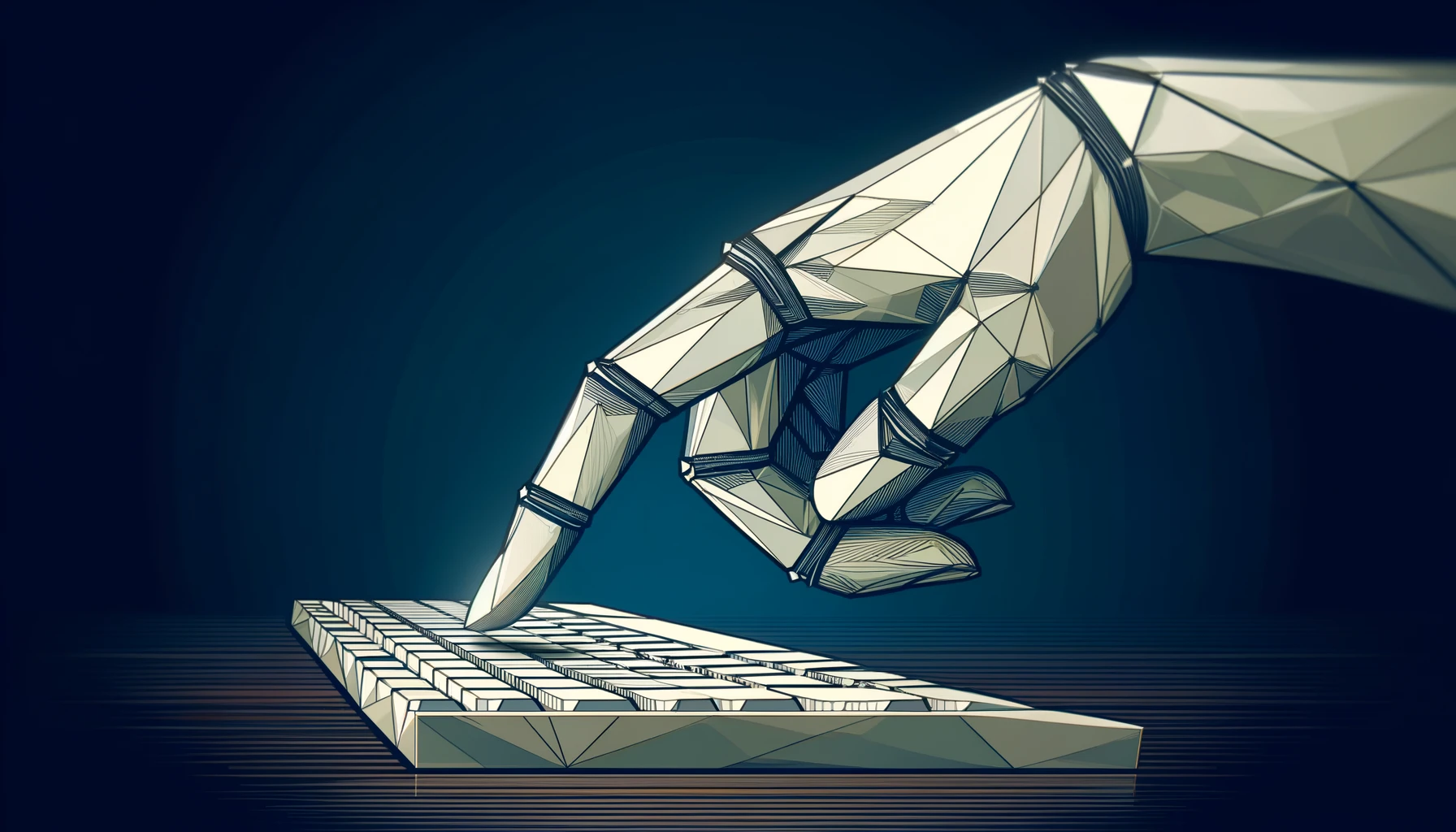
The US Copyright Office has granted a copyright to an author for a book she wrote using ChatGPT. However, the decision has a catch and is probably of limited general significance.
The US Copyright Office (USCO) has granted author Elisa Shupe a copyright for her book "AI Machinations: Tangled Webs and Typed Words", which she wrote with the assistance of OpenAI's ChatGPT, reports Wired.
Shupe, a 60-year-old retired army veteran, attempted to register her book with the USCO in October 2023 to challenge the agency's stance on AI-generated works. Her initial application was denied.
In her appeal, Shupe argued that due to her disabilities, including cognitive impairments, she could only finish her book with ChatGPT's help. She said she used the chatbot as an assistive technology, similar to an amputee using a prosthesis.
USCO grants limited copyright for text arrangement
In early April, the USCO approved the application with one significant limitation: Shupe will not receive copyright for the entire text, but only for the "selection, coordination, and arrangement of text generated by artificial intelligence."
This means that while no one can copy the book without permission, the individual sentences and paragraphs are not protected by copyright and could theoretically be rearranged and published in another book.
Matthew Sag, a professor of law and artificial intelligence at Emory University, describes this limited copyright as "thin," comparing it to "the kind of copyright you would get in an anthology of poetry that you didn't write." Despite the compromise, Shupe considers it a win for now.
Shupe's case highlights the USCO's struggle with the issue of AI. The agency still defines authorship as a purely human achievement, but is open to registering works that contain AI elements.
In February 2024, the USCO announced that it had registered over 100 works with AI elements, including books, songs, and works of art. A Wired search revealed more than 200 copyright registrations that explicitly disclose AI elements.
AI News Without the Hype – Curated by Humans
As a THE DECODER subscriber, you get ad-free reading, our weekly AI newsletter, the exclusive "AI Radar" Frontier Report 6× per year, access to comments, and our complete archive.
Subscribe nowAI news without the hype
Curated by humans.
- More than 16% discount.
- Read without distractions – no Google ads.
- Access to comments and community discussions.
- Weekly AI newsletter.
- 6 times a year: “AI Radar” – deep dives on key AI topics.
- Up to 25 % off on KI Pro online events.
- Access to our full ten-year archive.
- Get the latest AI news from The Decoder.