AI fuels a new wave of fake receipts, according to SAP Concur

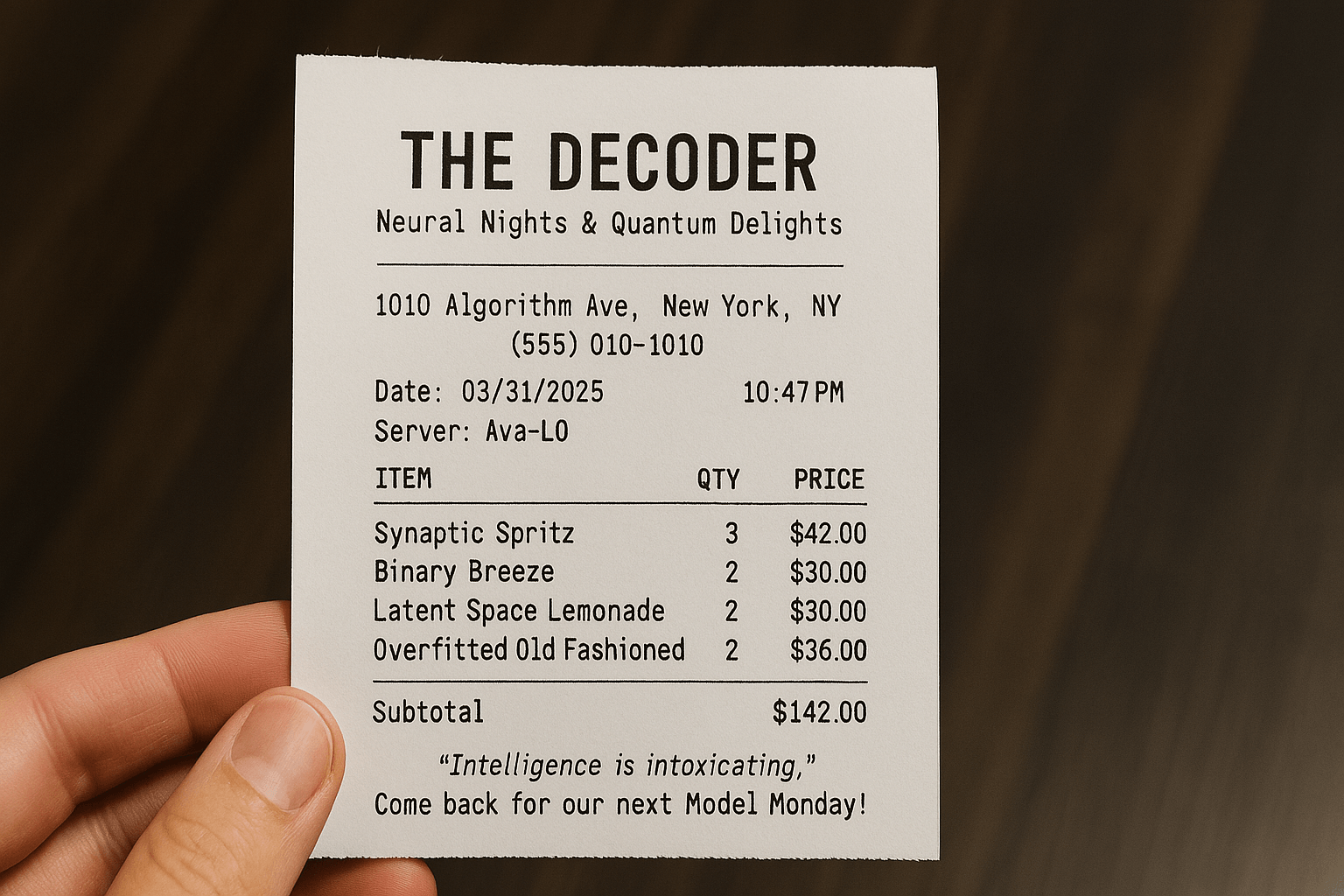
AI drives a surge in expense fraud with fake receipts, SAP Concur warns.
SAP Concur, one of the world's leading expense management platforms, reports that AI-generated receipts have become so realistic that even experienced reviewers can no longer rely on visual checks alone. The company now performs more than 80 million compliance reviews each month to identify fraudulent submissions.
A report from the Financial Times links the sharp increase in fake receipts to the emergence of new image generation models such as OpenAI's GPT-4o. AppZen found that in September, around 14 percent of all fraudulent documents were AI-generated, compared with none the previous year. Payment provider Ramp also uncovered more than $1 million in fake invoices within a 90-day period.
Mason Wilder, research director at the Association of Certified Fraud Examiners, noted that the barrier to creating convincing forgeries has disappeared. Even people with no technical or design skills can now produce fake receipts that look authentic.
Companies turn to AI tools to fight AI-driven fraud
To counter this new wave of expense fraud, companies are deploying AI-based detection tools of their own. These systems analyze image metadata and look for irregularities in timestamps, server identifiers, or travel patterns. Still, SAP Concur points out that this approach has limits: once someone takes a photo or screenshot of an AI-generated receipt, the identifying metadata is effectively erased.
The Financial Times survey also shows growing concern among financial leaders. Seventy percent of CFOs believe their employees may already be using AI to falsify travel or expense records, and 10 percent are certain it has happened in their organizations. Whether this reflects heightened suspicion or real incidents, AI’s role in expense processing is set to change how businesses handle reimbursement in the years ahead.
AI-generated receipts are becoming so realistic that traditional fraud detection methods no longer suffice, prompting companies like SAP Concur to develop new verification systems. | Image: SAP Concur
AI News Without the Hype – Curated by Humans
Subscribe to THE DECODER for ad-free reading, a weekly AI newsletter, our exclusive "AI Radar" frontier report six times a year, full archive access, and access to our comment section.
Subscribe nowAI news without the hype
Curated by humans.
- More than 16% discount.
- Read without distractions – no Google ads.
- Access to comments and community discussions.
- Weekly AI newsletter.
- 6 times a year: “AI Radar” – deep dives on key AI topics.
- Up to 25 % off on KI Pro online events.
- Access to our full ten-year archive.
- Get the latest AI news from The Decoder.