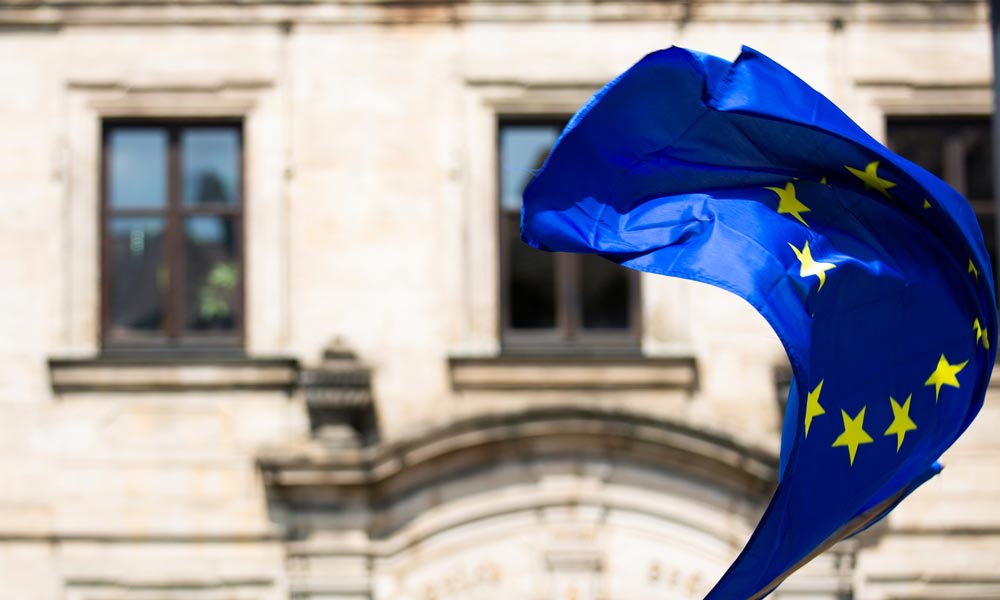
Read full article about: Meta CEO Mark Zuckerberg and OpenAI CEO Sam Altman support EU AI Act
Meta CEO Mark Zuckerberg and OpenAI CEO Sam Altman have expressed support for the EU's AI Act following discussions with European Commission Thierry Breton. Breton's discussions with Zuckerberg suggested alignment with the EU's risk-based approach to AI regulation, including measures such as watermarking.
Altman expressed appreciation for the EU's serious approach to AI regulation and said OpenAI's goal is to work in line with the European market, including on watermarking to make AI content traceable.
Good discussion in San Francisco 🇺🇸with Sam Altman, CEO of @OpenAI
European #AI Act in the finishing line to increase citizens’ trust and help startups develop innovative solutions 🇪🇺
Looking forward to pursuing our discussions — notably on watermarking.#AIPact pic.twitter.com/B9kOvIgGMQ
— Thierry Breton (@ThierryBreton) June 24, 2023
Read full article about: Grammys can only go to humans, but AI music and content is fine
The Recording Academy has updated its Grammy Awards rules and guidelines for the 2024 Grammys, addressing the impact of artificial intelligence (AI) on the music industry. Harvey Mason Jr, CEO of the Recording Academy, reveals that AI music and content will be allowed for submission, but awards will only be given to human creators who have made a creative contribution in the appropriate categories. The decision comes after an AI-generated song featuring the voices of "Drake" and "the Weeknd" went viral.
If there's an AI voice singing the song or AI instrumentation, we'll consider it. But in a songwriting-based category, it has to have been written mostly by a human.
Harvey Mason Jr, CEO
Read full article about: Deepmind founder proposes a new kind of Turing test: making money online
AI expert Mustafa Suleyman, founder of Deepmind and Inflection.ai, argues in his forthcoming book that the Turing Test is outdated. Instead, he proposes a new benchmark focused on "artificial capable intelligence" (ACI), which measures an AI's ability to perform complex tasks independently. His test is to task an AI with generating a $1 million profit from a $100,000 investment through e-commerce. He predicts that within two years, AI will create and sell products autonomously, with significant economic implications.