China's semiconductor independence push is turning US export controls into a domestic boom

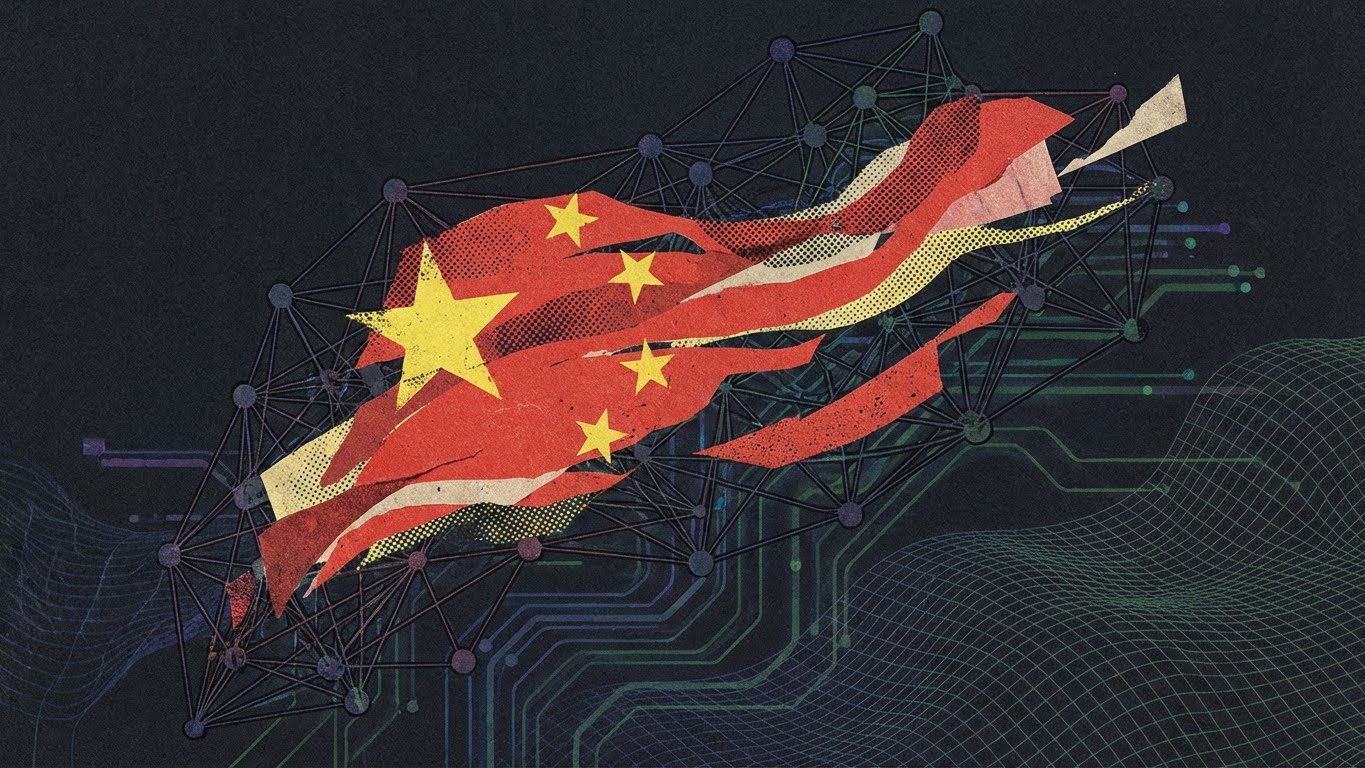
Beijing is enforcing an undocumented quota requiring new chip factories to prove that at least half of their equipment comes from Chinese manufacturers. The rule is squeezing foreign suppliers from the US, Japan, South Korea, and Europe out of the Chinese market.
China has introduced a sweeping new requirement for its semiconductor industry. According to a report by Reuters, chipmakers applying for government permits to build or expand factories must now show that at least half of their equipment comes from domestic manufacturers. The rule isn't publicly documented, but authorities have been enforcing it in approval processes over recent months.
Applications that fall short of this threshold are typically rejected. Regulators do make exceptions for supply shortages and advanced production lines where domestic equipment isn't yet available.
"Authorities prefer if it is much higher than 50%," a source told Reuters. "Eventually they are aiming for the plants to use 100% domestic equipment."
US export restrictions push Chinese fabs toward domestic suppliers
The quota is a direct response to tightened US export restrictions. President Xi Jinping has called for a "whole nation" approach to building a fully self-reliant semiconductor supply chain.
The 50 percent rule means Chinese manufacturers are now picking domestic suppliers even when foreign equipment is still available.
A former employee of Chinese equipment supplier Naura Technology describes the shift: "Before, domestic fabs like SMIC would prefer U.S. equipment and would not really give Chinese firms a chance. But that changed starting with the 2023 U.S export restrictions, when Chinese fabs had no choice but to work with domestic suppliers."
The requirement is already paying off. Naura Technology, China's largest chip equipment supplier, is testing its etching tools on a 7-nanometer production line at SMIC. The company registered 779 patents in 2025 - more than double what it filed in 2020 and 2021 - and grew revenue by 30 percent to 16 billion yuan in the first half of the year. Competitor AMEC grew by 44 percent. According to analysts, China has now reached roughly 50 percent self-sufficiency in photoresist removal and cleaning equipment.
Former ASML engineers help China build EUV prototype
Another Reuters report shows just how serious China is about catching up: scientists in Shenzhen reportedly finished a prototype EUV lithography machine in early 2025, which is now being tested. Former engineers from Dutch semiconductor equipment manufacturer ASML built the machine using components from older ASML systems sourced on the secondary market.
As recently as April, ASML CEO Christophe Fouquet said China would need "many, many years" to develop such technology. Beijing is targeting mass production by 2028, though Reuters sources think 2030 is more realistic. The high-precision optical systems, particularly those from Carl Zeiss, a key ASML partner, are apparently proving tough to replicate.
Nvidia caught between US restrictions and Chinese market
The US government recently banned Nvidia from selling its B30A chip to China. Nvidia CEO Jensen Huang responded by warning that China could win the AI race, pointing to the country's lower energy costs and lighter regulation. The US chip industry might want to ask the German auto industry how fast China can catch up when it has to - German carmakers spent years transferring know-how to China and are now getting overtaken by Chinese manufacturers.
Nvidia can still sell its H200 chips to China under strict conditions but faces a 25 percent tax. The company is also developing technology to verify chip locations and make smuggling harder. Beijing, for its part, is informally pressuring Chinese companies not to buy Nvidia chips at all, according to the Financial Times.
AI News Without the Hype – Curated by Humans
Subscribe to THE DECODER for ad-free reading, a weekly AI newsletter, our exclusive "AI Radar" frontier report six times a year, full archive access, and access to our comment section.
Subscribe nowAI news without the hype
Curated by humans.
- More than 16% discount.
- Read without distractions – no Google ads.
- Access to comments and community discussions.
- Weekly AI newsletter.
- 6 times a year: “AI Radar” – deep dives on key AI topics.
- Up to 25 % off on KI Pro online events.
- Access to our full ten-year archive.
- Get the latest AI news from The Decoder.