OpenAI launches Study Mode for ChatGPT while education users are told to wait and learn later

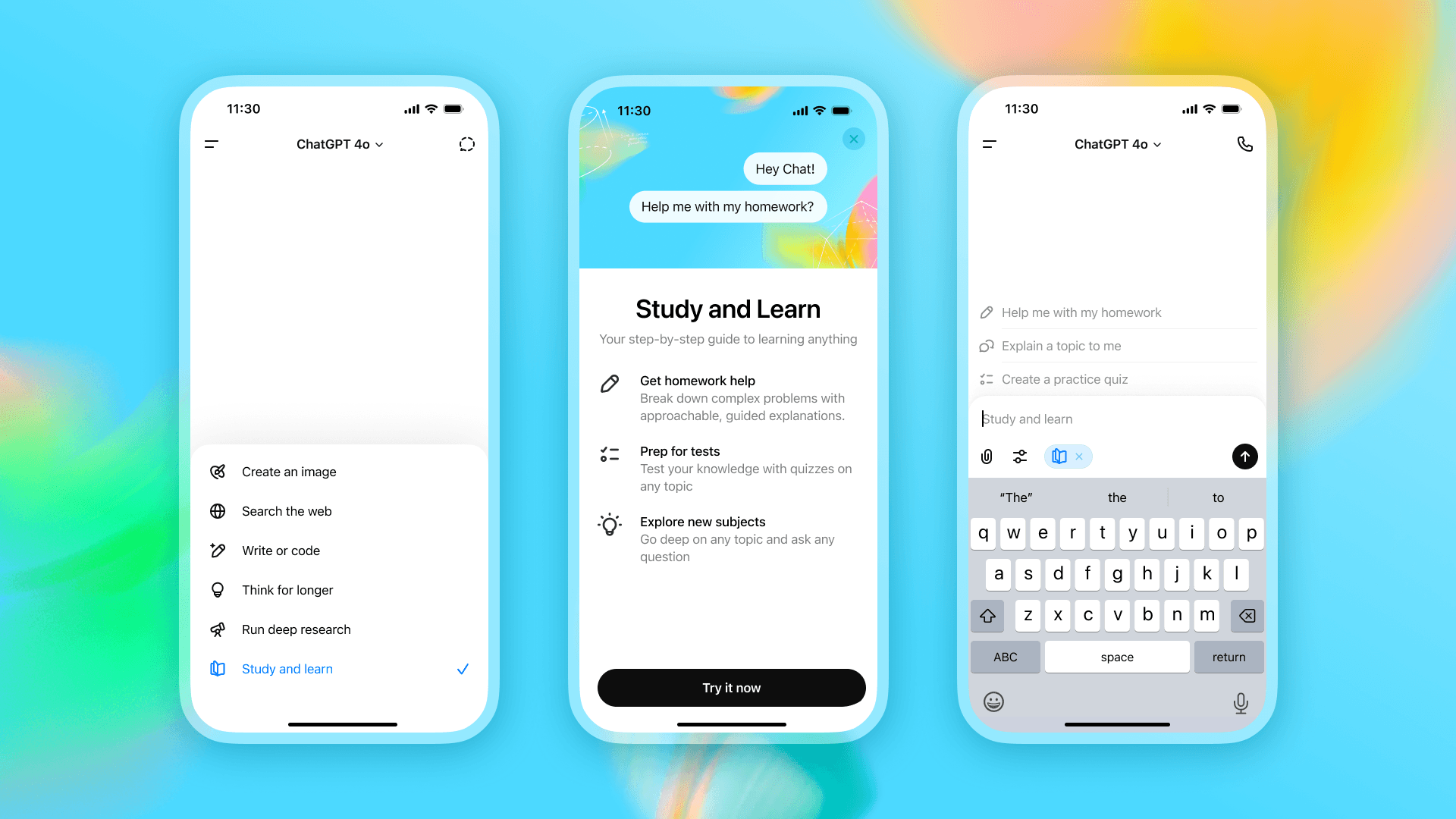
OpenAI has introduced a new "Study Mode" in ChatGPT, positioning the chatbot more directly as a learning tool. Instead of giving direct answers, ChatGPT now guides users through questions and hints, encouraging them to think through problems themselves.
The new mode is available immediately to all signed-in users on ChatGPT Free, Plus, Pro, and Team. Ironically, however, it will only be added to ChatGPT Edu in the coming weeks.
OpenAI says ChatGPT is already widely used for homework, exam prep, and learning new concepts. With Study Mode, the company wants to move away from ChatGPT as a simple answer generator and turn it into an interactive tool that supports learning and understanding.
Source: OpenAI
Step-by-Step, not instant answers
Study Mode offers structured, personalized support. Users get tailored questions, hints, and prompts for reflection, all matched to their skill level. Complex topics are broken into manageable sections to avoid cognitive overload. The mode also includes quizzes and open-ended tasks to check understanding, and can be turned on or off at any time.
According to OpenAI, the system instructions are grounded in learning science principles like active learning, metacognition, constructive feedback, and curiosity-driven exploration.
Similarities to Claude
The concept is similar to the "Learning Mode" in Claude, Anthropic's chatbot. There, too, users are prompted to think for themselves through guided questions rather than receiving direct answers. Anthropic education expert Drew Bent says students interviewed about AI tools often worry that shortcuts might stunt their intellectual growth, even describing fears of "brain rot" if learning gets too easy.
Claude's Learning Mode also asks follow-up questions, encourages reflection, and can generate literature analyses with correct citations.
Work in progress
Currently, Study Mode relies on external system instructions. OpenAI plans to eventually build this behavior directly into its core models. For now, the setup allows for faster feedback and iteration, though it may lead to inconsistent results. Upcoming features include progress tracking, visual explanations, and greater personalization.
OpenAI says it is working with research partners like the SCALE Initiative at Stanford to study the impact of AI on learning, but there are no published results yet.
AI News Without the Hype – Curated by Humans
Subscribe to THE DECODER for ad-free reading, a weekly AI newsletter, our exclusive "AI Radar" frontier report six times a year, full archive access, and access to our comment section.
Subscribe nowAI news without the hype
Curated by humans.
- More than 16% discount.
- Read without distractions – no Google ads.
- Access to comments and community discussions.
- Weekly AI newsletter.
- 6 times a year: “AI Radar” – deep dives on key AI topics.
- Up to 25 % off on KI Pro online events.
- Access to our full ten-year archive.
- Get the latest AI news from The Decoder.