Qualcomm's AI Orchestrator aims to bring personalized AI assistants to your devices

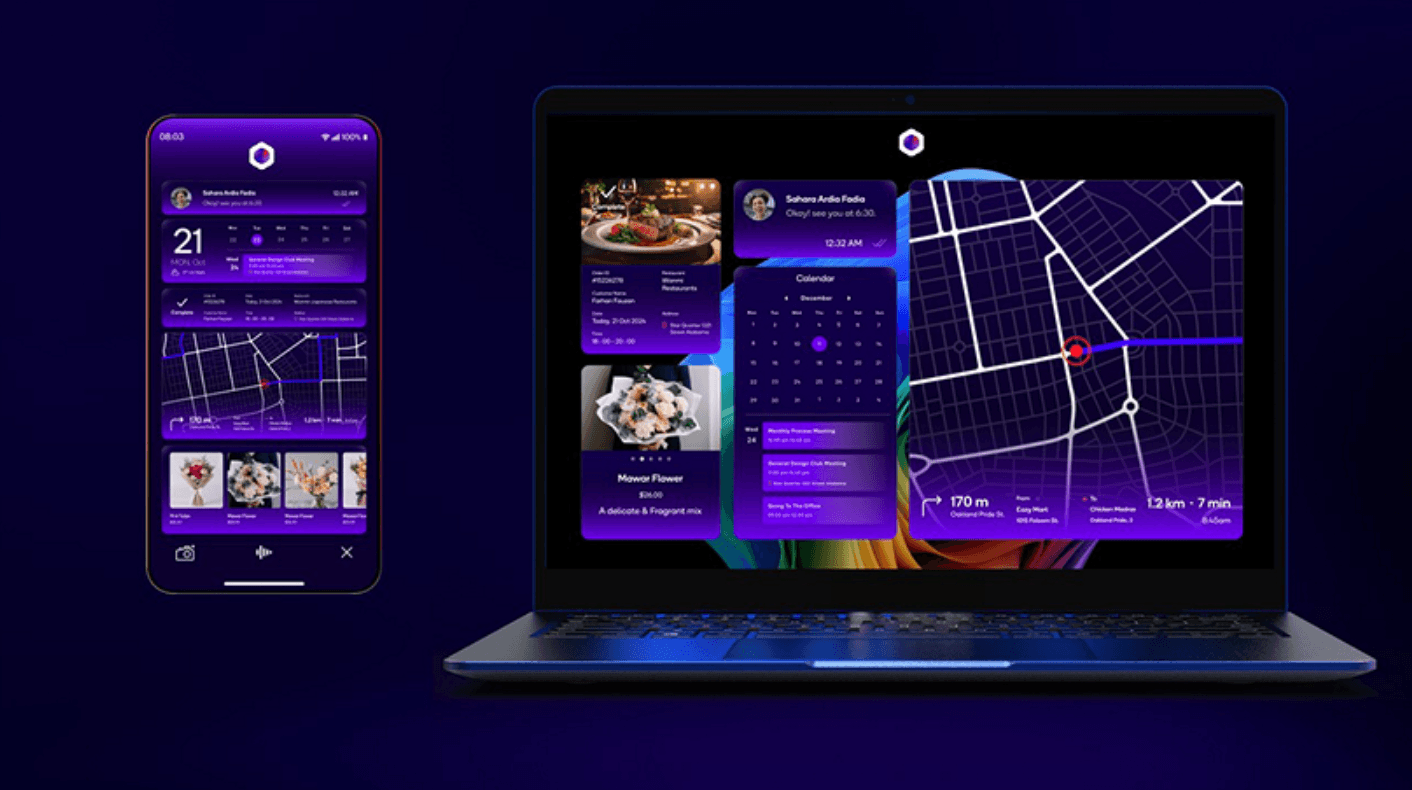
Chip maker Qualcomm is rolling out new software to coordinate AI models and apps directly on devices. The "AI Orchestrator" aims to bridge personal data, apps, and AI models.
Qualcomm says the software will act as a go-between for personal information, apps, and on-device AI models. It's designed to combine data like favorite foods, workout routines, and frequent contacts with generative AI assistants to provide tailored responses and actions.
The software supports multiple types of input, including text, images, and voice, and can supposedly leverage the features of installed apps. Qualcomm says that on-device processing offers advantages in terms of response times and privacy.
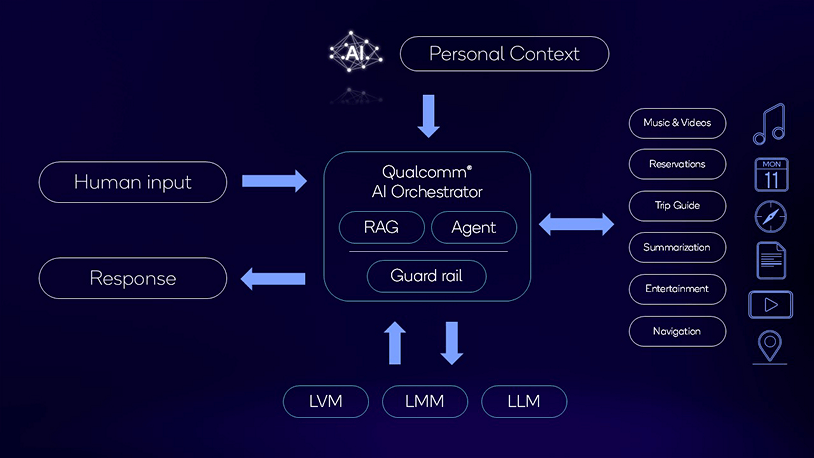
Qualcomm gives an example of planning dinner, where the AI assistant could coordinate schedules, make reservations automatically, block calendar time, and adapt to changes.
The Qualcomm AI Orchestrator will be integrated into the Qualcomm AI Stack, mediating between apps and AI frameworks and runtimes. Qualcomm plans to expand the orchestrator's capabilities, especially for seamless device-to-device and device-to-car setups.
More details on the AI Orchestrator will be revealed at Qualcomm's annual Snapdragon Summit starting October 21.
Reliable agent AI does not yet exist
Qualcomm is tapping into the "agent" AI trend, seen by some AI companies like OpenAI as the next frontier. The concept involves different AI systems interacting, sometimes within a model, to tackle more complex tasks.
But advanced AI agents like the ones Qualcomm outlines don't exist yet. Microsoft AI chief Mustafa Suleyman recently said that AI models reliable enough for agents are about two generations away. OpenAI reportedly has market-ready AI agent systems planned for next year. Google DeepMind chief Demis Hassabis expects a one- to two-year timeline.
AI News Without the Hype – Curated by Humans
As a THE DECODER subscriber, you get ad-free reading, our weekly AI newsletter, the exclusive "AI Radar" Frontier Report 6× per year, access to comments, and our complete archive.
Subscribe nowAI news without the hype
Curated by humans.
- Over 20 percent launch discount.
- Read without distractions – no Google ads.
- Access to comments and community discussions.
- Weekly AI newsletter.
- 6 times a year: “AI Radar” – deep dives on key AI topics.
- Up to 25 % off on KI Pro online events.
- Access to our full ten-year archive.
- Get the latest AI news from The Decoder.