Report: Aging power grid puts OpenAI and Microsoft's growth at risk

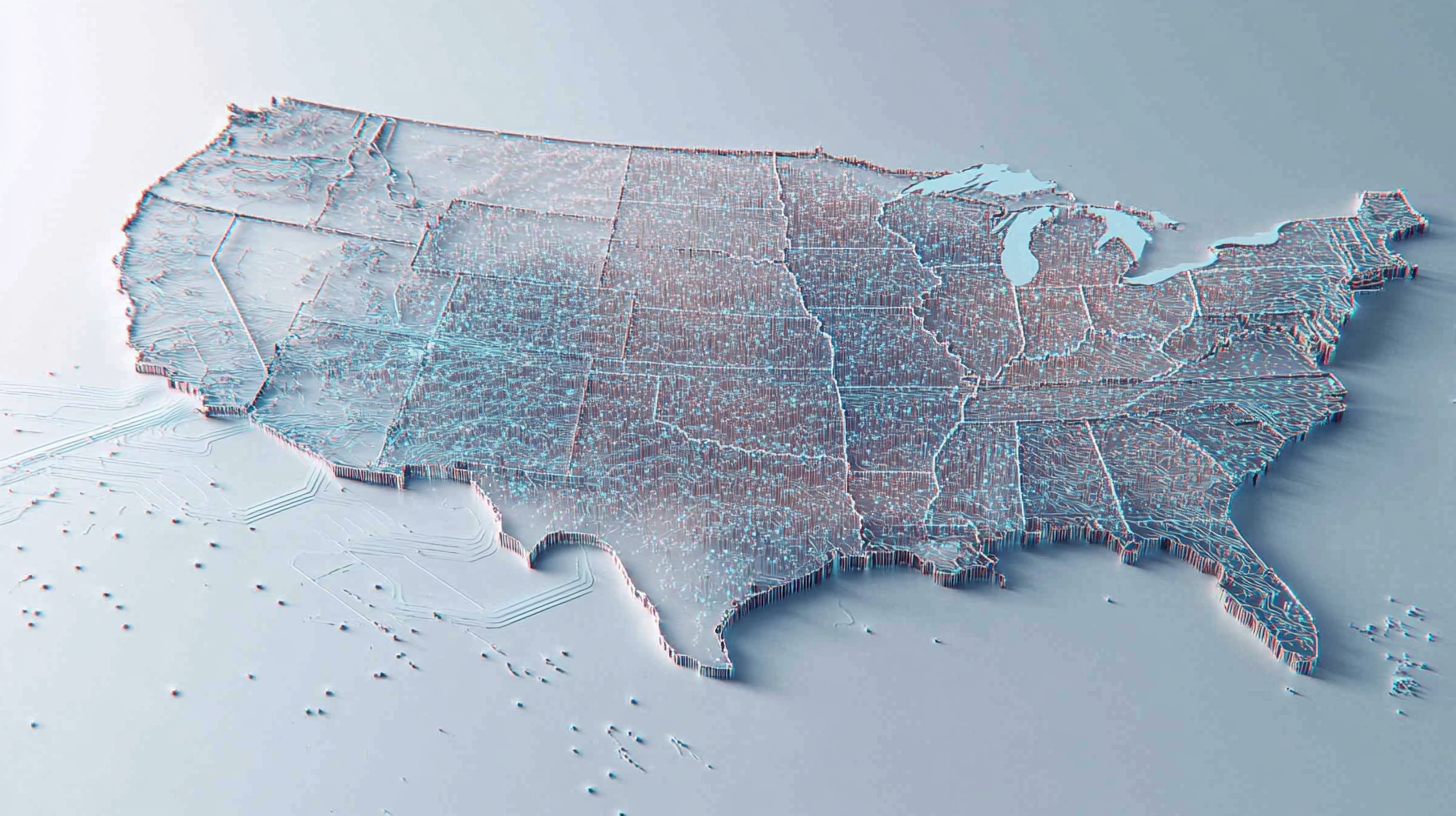
A new report warns that a massive energy gap in the US could threaten the expansion plans of OpenAI, Microsoft, and their peers.
While tech giants pour billions into new data centers, a physical limit is emerging: the American power grid. An analysis by the Financial Times suggests planned capacity for AI data centers will drastically outstrip available power supply in the coming years.
The analysis indicates that by 2028, an estimated 44 gigawatts (GW) of additional power will be needed for new data centers. However, grid infrastructure bottlenecks mean only about 25 GW is expected to come online during that period. The resulting 19 GW deficit represents roughly 40 percent of the total demand.
The major "hyperscalers"—Amazon, Google, Meta, and Microsoft—have outlined investment plans exceeding $400 billion, primarily for data centers. OpenAI alone has reportedly signed infrastructure contracts totaling over $1.4 trillion to secure roughly 28 GW of capacity over the next eight years. CEO Sam Altman has characterized this energy shortage as an existential threat, noting that without sufficient compute power, the company cannot generate revenue or build models at the necessary scale.
Phantom projects and aging infrastructure clog the grid
The US power grid isn't keeping up. After two decades of stagnant growth, electricity demand is spiking, with AI data centers accounting for more than half of the expected increase.
The report details how the infrastructure itself is aging, with many poles and transformers dating back to the 1960s and 1970s. Bureaucracy makes matters worse: the average wait time from requesting a grid connection to commercial operation now exceeds eight years nationwide.
Planning is further complicated by what the report describes as "phantom data centers." Developers often submit multiple applications to different utilities to find the best price, artificially inflating queues. Supply chains are equally strained: lead times for large transformers are three to four times longer than in 2020. Gas turbines, often used as a stopgap, now have delivery times of around four and a half years.
Tech giants turn to off-grid power and controversial tactics
To bypass delays, AI companies are increasingly turning to "behind-the-meter" power generation.
A prominent example is Elon Musk's xAI. According to the Southern Environmental Law Center (SELC), the company powered its controversial "Colossus" cluster in Memphis, Tennessee, for months using dozens of gas turbines without necessary environmental permits. xAI only received a permit for 15 backup turbines in July, though the SELC claims up to 35 turbines were observed on-site.
OpenAI is also planning to use ten natural gas turbines with a 361-megawatt capacity for its "Stargate" project in Texas. Meanwhile, Microsoft is betting on nuclear power, sealing a deal to reactivate the Three Mile Island nuclear plant by 2027.
The energy race against China becomes a national security issue
The tech industry is framing its energy hunger as a matter of national security to accelerate development. In an open letter to the US government, OpenAI warned that China is pulling ahead in infrastructure.
The concerns aren't baseless: China added roughly 429 GW of new power capacity in 2024—more than a third of the entire US grid. The US added just 51 GW in the same period.
While the US government attempts to fast-track permits and delay coal plant retirements via emergency orders, environmentalists warn that focusing on fossil fuels and blocking renewables is counterproductive, as solar and battery parks are much faster to build than gas plants. If the power deficit isn't resolved, analysts cited in the report warn the feared "AI bubble" could indeed burst—not from a lack of demand for intelligence, but from a simple lack of electrons.
AI News Without the Hype – Curated by Humans
Subscribe to THE DECODER for ad-free reading, a weekly AI newsletter, our exclusive "AI Radar" frontier report six times a year, full archive access, and access to our comment section.
Subscribe nowAI news without the hype
Curated by humans.
- More than 16% discount.
- Read without distractions – no Google ads.
- Access to comments and community discussions.
- Weekly AI newsletter.
- 6 times a year: “AI Radar” – deep dives on key AI topics.
- Up to 25 % off on KI Pro online events.
- Access to our full ten-year archive.
- Get the latest AI news from The Decoder.