

Ad
Skip to content
Read full article about: GPT-5.2 Pro solves another Erdős problem while a new database reveals most attempts still fail

OpenAI's GPT-5.2 Pro has helped solve another Erdős problem. Neel Somani used the AI model to crack Erdős problem #281 from number theory. Mathematician Terence Tao calls this "perhaps the most unambiguous instance" of an AI solving an open mathematical problem. While earlier proofs may have influenced the model's answer, Tao confirms GPT-5.2 Pro's proof is "rather different".

via Neel Somani

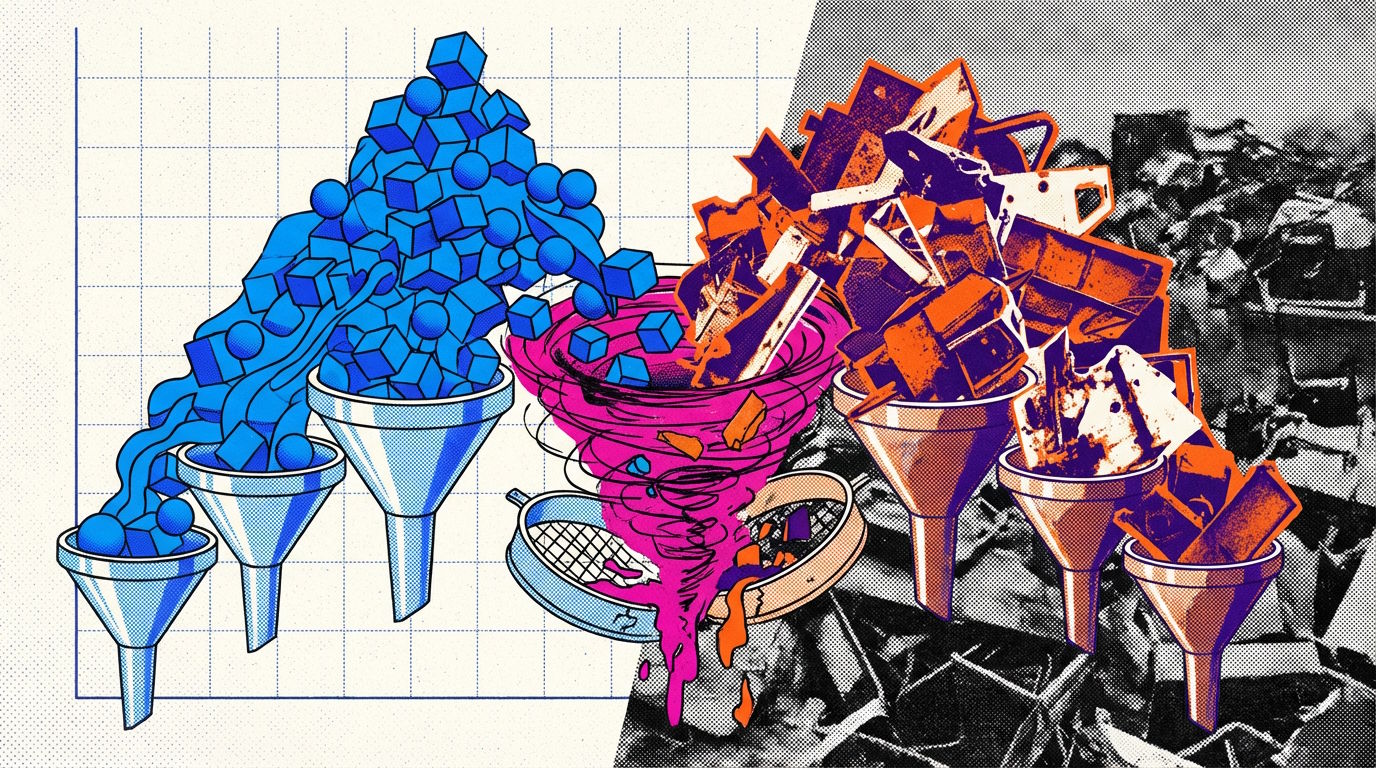
But Tao warns against a skewed perception of AI capabilities. Negative results rarely get published, while positive results go viral. A new database by Paata Ivanisvili and Mehmet Mars Seven tracks AI attempts at Erdős problems, showing actual success rates of just one to two percent, clustered around easier problems.

Still, AI serves as a useful tool here, even if moderately difficult Erdős problems might remain out of reach, according to Tao. The first autonomous solution to an Erdős problem confirmed by Tao dates back to January 4, 2026.

Terence Tao says GPT-5.2 Pro cracked an Erdős problem, but warns the win says more about speed than difficulty

Terence Tao says OpenAI’s GPT-5.2 Pro has solved an open Erdős problem largely on its own for the first time. He calls it a milestone but warns against reading too much into it. For Tao, the more exciting development lies elsewhere.

Read full article about: OpenAI safety researcher joins Anthropic's alignment team

Andrea Vallone, a senior safety researcher at OpenAI, has moved to Anthropic. She'll be working on the alignment team, which focuses on AI model risks. Vallone spent three years at OpenAI, where she founded the "Model Policy" research team and contributed to major projects including GPT-4, GPT-5, and the company's reasoning models.

Over the past year, Vallone led OpenAI's research on an increasingly urgent question: how should AI models respond when users show signs of emotional dependency or mental health struggles? Some users, including teenagers, have taken their own lives after conversations with chatbots. Several families have filed lawsuits, and the U.S. Senate has held hearings on the issue.

At Anthropic, Vallone will report to Jan Leike. Leike himself was head of safety research at OpenAI before leaving the company in May 2024. At the time, Leike publicly criticized OpenAI, saying safety had taken a backseat to shipping new products.

Read full article about: Anthropic's Labs team gets a shake-up as Instagram co-founder Mike Krieger joins experimental AI unit

Anthropic is growing its Labs team, which builds experimental Claude AI products. Instagram co-founder Mike Krieger, formerly Anthropic's Chief Product Officer, is moving to Labs to work with Ben Mann. Ami Vora, who joined in late 2025, will lead product development alongside CTO Rahul Patil.

According to President Daniela Amodei, Labs gives Anthropic room to experiment. The team has already shipped several hits: Claude Code became a billion-dollar product in six months, and the Model Context Protocol (MCP) now sees 100 million monthly downloads as the industry standard for connecting AI with tools and data. Cowork, which brings Claude Code capabilities to office work, was built in Labs in just 1.5 weeks. Skills and Claude in Chrome also came out of the lab.