OpenAI appears to be adopting the skills system Anthropic introduced in October, according to a discovery by user Elias Judin shared on X. Support for these skills has surfaced in both the Codex CLI tool and ChatGPT.
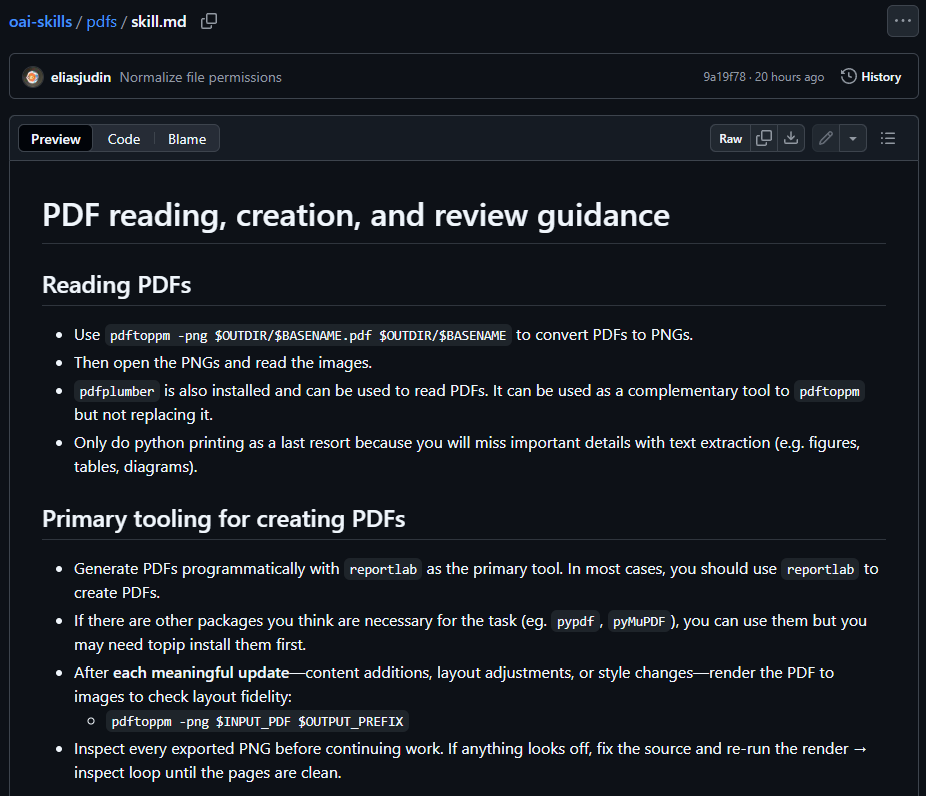
Judin found directories named "pdfs" and "spreadsheets" containing "skill.md" files. These files provide specific instructions for processing documents and data. It's basically like your prompt calling a more specific prompt to solve a complex subtask necessary for the main goal—like extracting text from a PDF. Since it's just a folder containing a Markdown file and maybe scripts, it's easy to adapt.
A look at the "skill.md" file for PDF handling reveals specific instructions for reading and creating documents. | Image: Elias Judin via GitHub
The file structure suggests OpenAI is organizing AI tools into app-like modules designed for specific tasks. Judin, who found the feature while using a "5.2 pro" model, documented the findings on GitHub. Anthropic debuted this modular system in October to help its Claude assistant handle specialized tasks.
OpenAI claims its team built the Sora Android app in just 28 days by leveraging its code-generation AI, Codex. According to a report from OpenAI employees Patrick Hum and RJ Marsan, a small team of four engineers utilized an early version of the GPT-5.1 Codex model to build the application, processing around five billion tokens along the way.
According to the authors, the AI handled the bulk of the actual writing—specifically tasks like translating existing iOS code into Android-compatible formats. This allowed the human developers to focus on high-level architecture, planning, and verifying the results. The team described Codex as acting like a new, experienced colleague that just needed clear instructions to get the job done. Despite the rapid timeline, OpenAI reports the app is 99.9 percent stable. You can read a detailed breakdown of their process on the OpenAI blog.
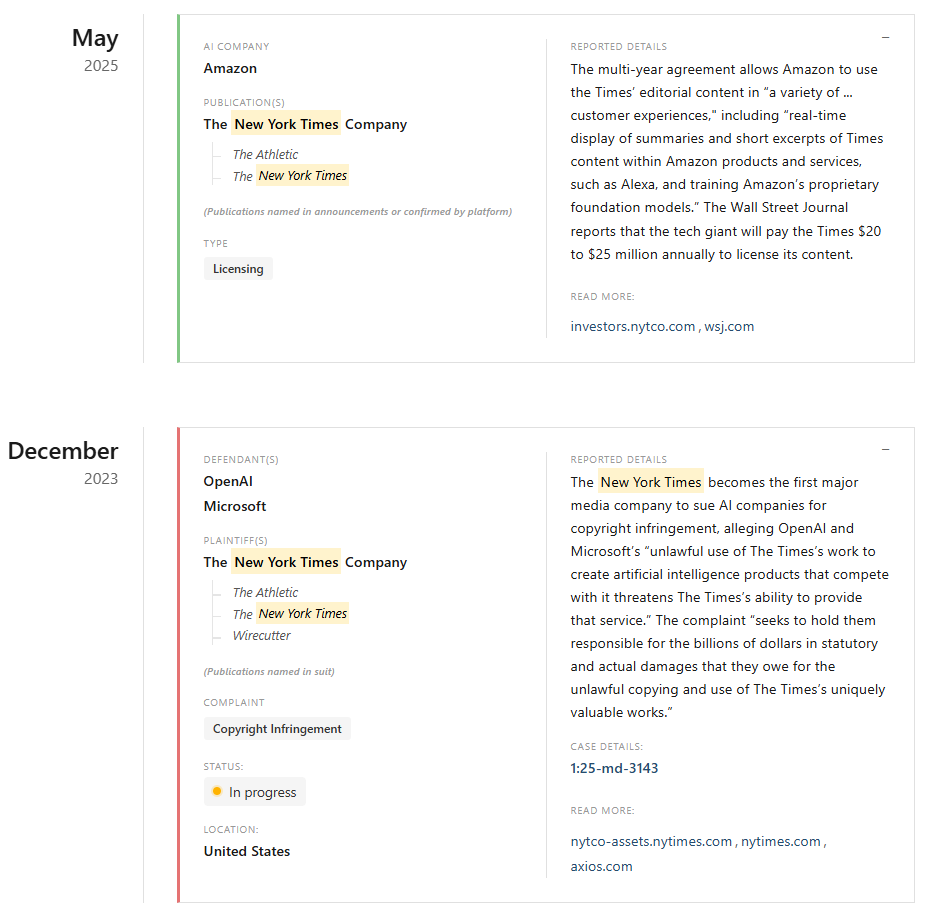
AI is reshaping the media landscape. Some companies are striking partnerships, others are fighting back against alleged copyright infringement, and some are doing both. To keep track of this shifting terrain, Columbia University's Tow Center has launched an "AI Deals and Disputes Tracker." The tool, part of the center's "Platforms and Publishers" project, monitors the evolving relationship between news publishers and AI companies by documenting lawsuits, business deals, and financial grants based on publicly available information.
The tracker lists major agreements and disputes between publishers and AI companies. | Image: Tow Center
The Tow Center says the overview gets updated at the start of each month, with the most recent data from December 12, 2025. The goal is to give readers a clear picture of the legal and economic shifts happening across the industry. Klaudia Jaźwińska compiles the data and welcomes tips on missing developments to keep the tracker up to date.
Google has updated the voice for "Search Live." A new Gemini audio model powers the feature, producing responses that sound more natural and fluid, according to a blog post. Search Live lets users have real-time conversations while displaying relevant websites. The feature is part of Google Search's "AI Mode".
The update rolls out to all Search Live users in the US over the coming week. Users can open the Google app on Android or iOS, tap the Live icon, and speak their question.