Flux 2 small brings AI image generation and editing to consumer graphics cards

Key Points
- German AI startup Black Forest Labs presents Flux 2 small, a family of models that combines text-to-image generation, image processing, and multi-reference generation in one compact model and runs on consumer graphics cards such as the RTX 3090.
- The family consists of a 9 billion and a 4 billion parameter model. The smaller model only requires 13 gigabytes of VRAM, while quantized versions are said to achieve up to 2.7 times the speed with significantly lower memory requirements.
- The 4B model is released for commercial use under an Apache 2.0 license, while the 9B model is subject to a non-commercial license.
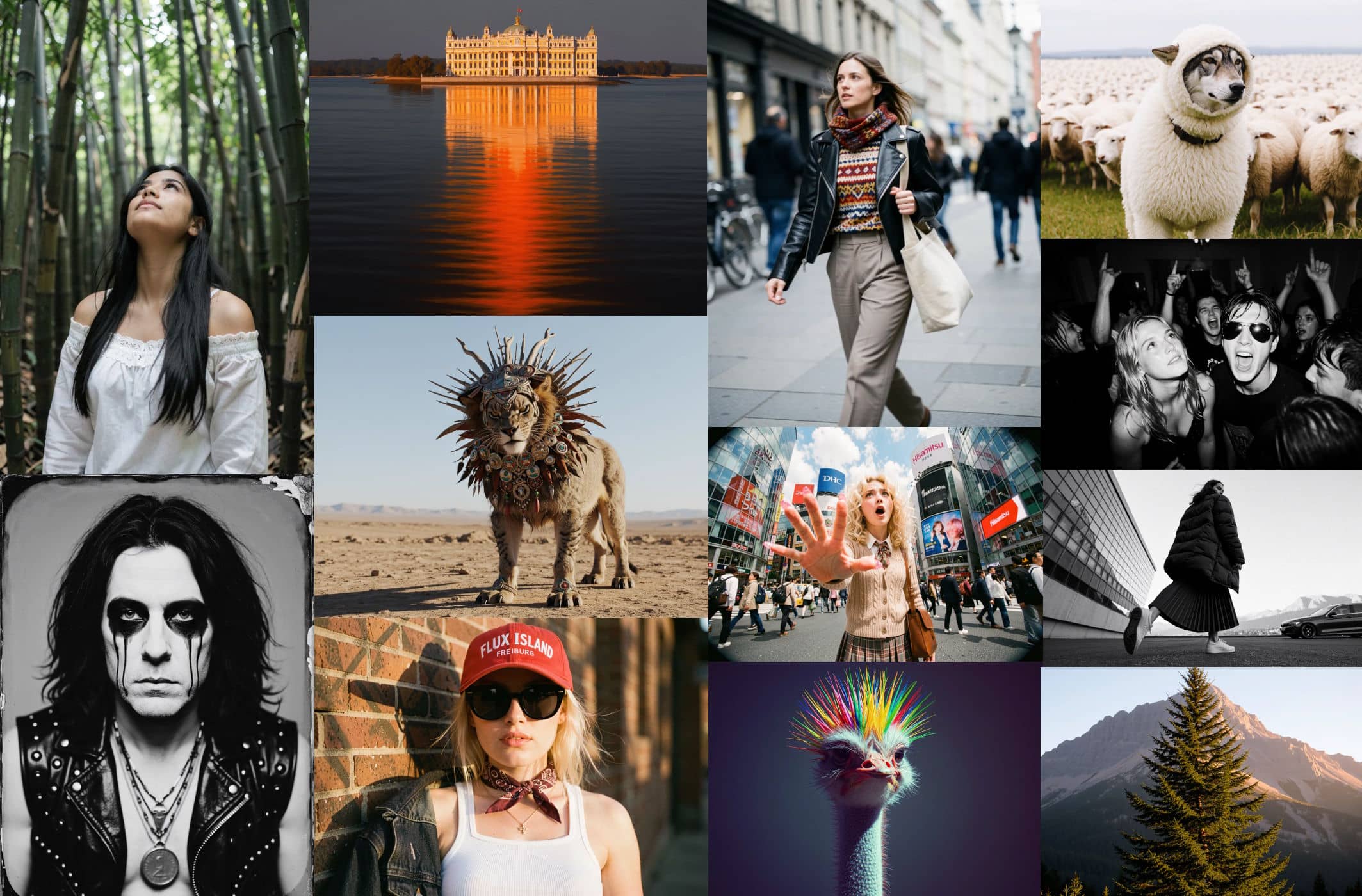
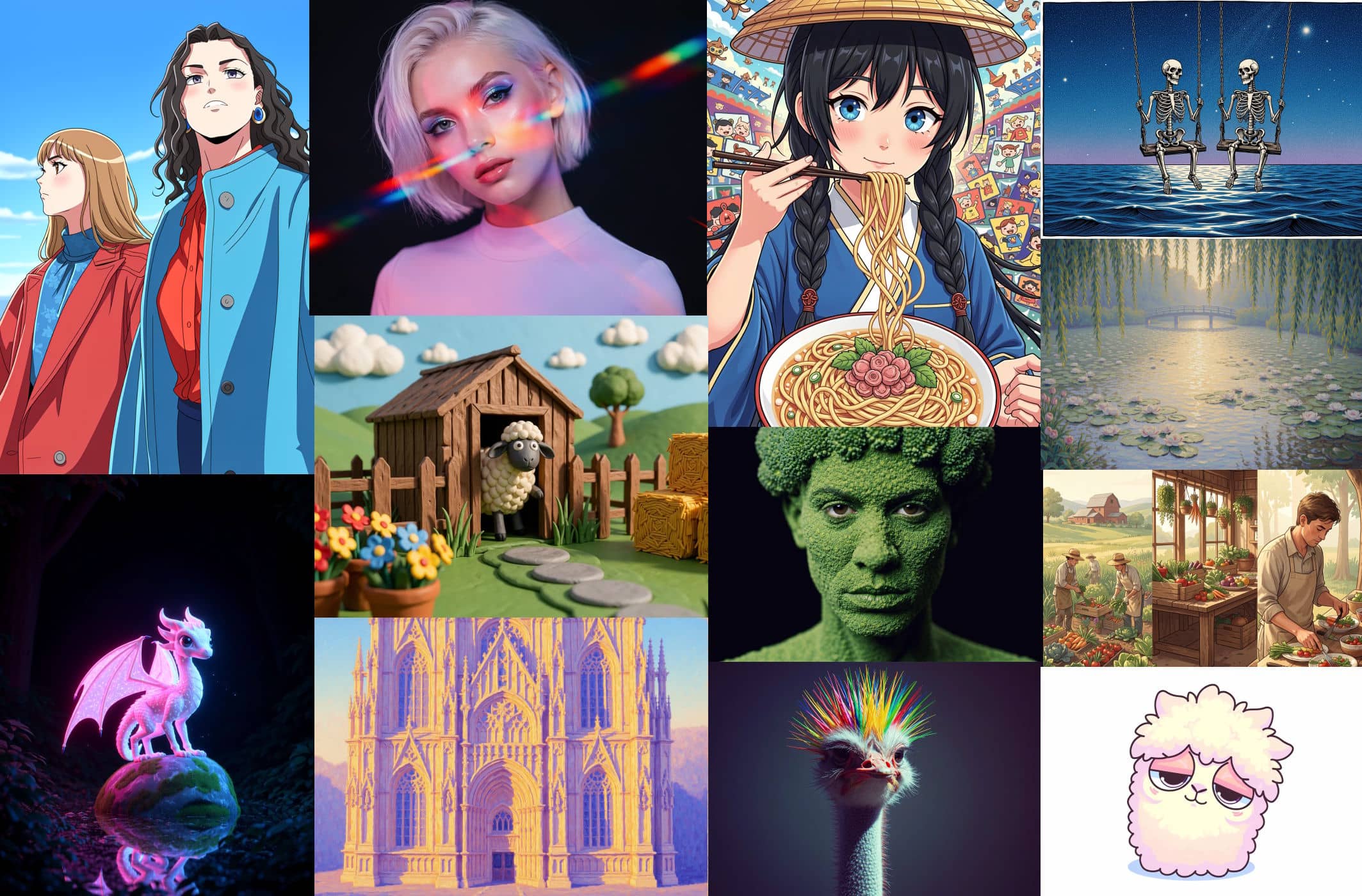
German AI startup Black Forest Labs launches Flux 2 "klein" (small), a compact model that combines image generation and editing on consumer GPUs like the RTX 3090.
The new models expand the Flux 2 family introduced in November with two main variants: a 9 billion parameter flagship and a slimmer 4 billion parameter version for broader use. Both come in undistilled base variants for research and fine-tuning.
Local generation and editing on consumer GPUs
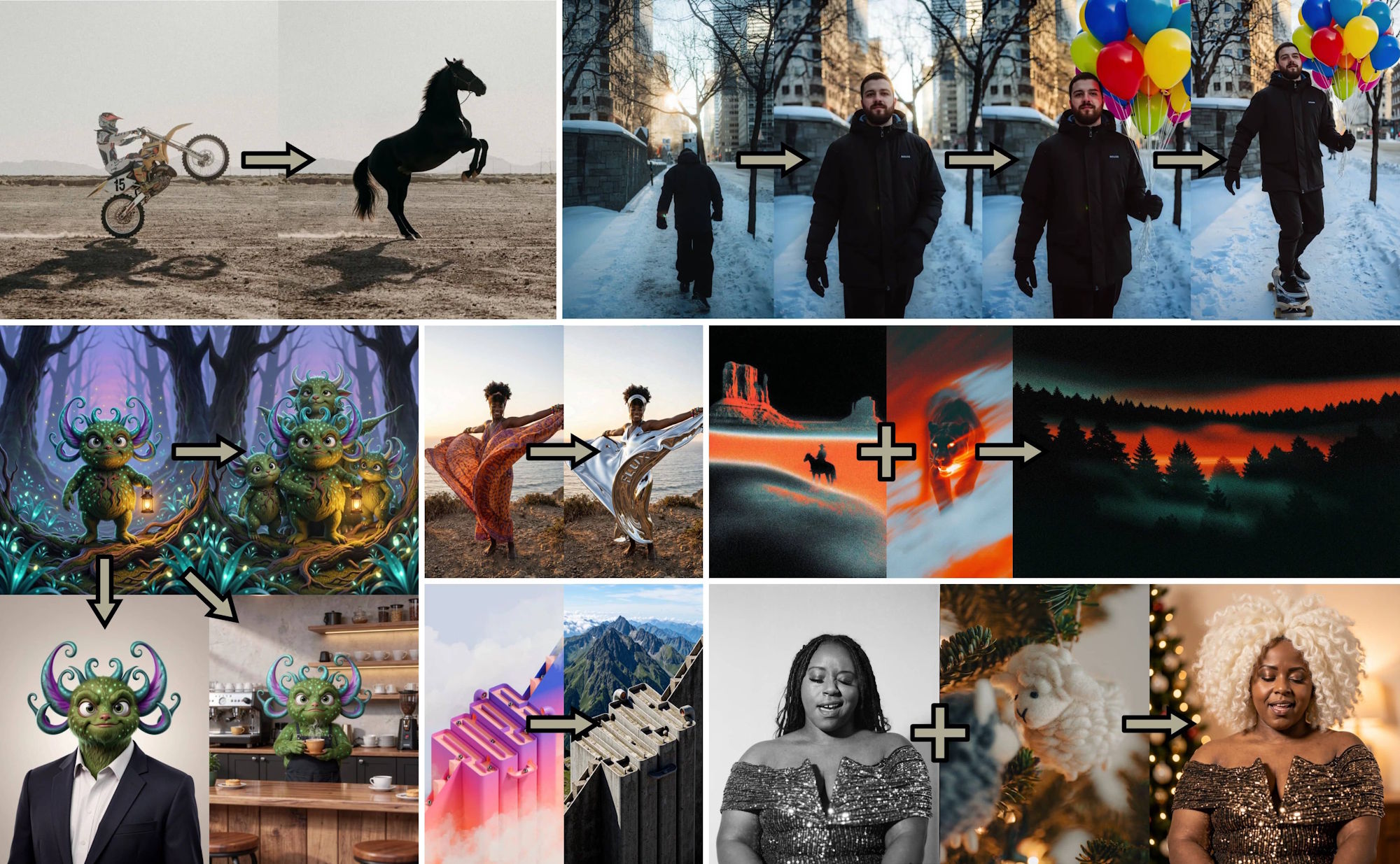
Flux 2 small packs three capabilities into a single model: text-to-image generation, image editing, and multi-reference generation, where multiple input images can be combined into new compositions.
This combination isn't new. Black Forest Labs laid the groundwork with the Flux 1 context model less than a year ago. The difference with Flux 2 small is that this unified architecture now fits in a compact package that runs on consumer hardware. The 4B model needs just 13 gigabytes of VRAM and works on graphics cards like the Nvidia RTX 3090 or RTX 4070.
Fast generation comes with caveats
The 9B model uses a flow architecture optimized to generate images in just four computation steps. Black Forest Labs promises generation times under 0.5 seconds, though that benchmark was measured on Nvidia's GB200, a professional server chip, not standard consumer GPUs.
Black Forest Labs also worked with Nvidia to develop quantized versions of the model. Quantization stores model weights with less precision, cutting both memory requirements and compute time.
The FP8 variant (8-bit floating-point format) runs up to 1.6 times faster while using up to 40 percent less VRAM, according to Black Forest Labs. The NVFP4 variant uses Nvidia's proprietary 4-bit floating-point format, enabling up to 2.7 times the speed with up to 55 percent less memory. These benchmarks were measured on the current RTX 5080 and RTX 5090 graphics cards.
In its own Elo comparisons, Black Forest Labs positions the 9B model as Pareto-optimal for quality versus latency. The company claims it matches or exceeds Qwen's quality at a fraction of the latency and VRAM consumption, outperforms Z-Image, and beats models five times its size. These claims haven't been independently verified.
Licensing differs by model size: the 4B model uses the open Apache 2.0 license and can be used commercially without restrictions. The 9B model is non-commercial only; businesses need a separate license. Black Forest Labs provides a reference implementation on GitHub. The model also works with ComfyUI and the Python library Diffusers.
Safety filters and watermarking
Black Forest Labs details its safety measures in the Hugging Face documentation. The training data was filtered for NSFW content and known child sexual abuse material before training began. The company says it works with the British Internet Watch Foundation.
After training, the model went through several rounds of targeted fine-tuning against potential abuse scenarios. The repository includes filters for NSFW content in both inputs and outputs, plus support for pixel-layer watermarking and the C2PA standard for provenance verification.
The model has known limitations: it's not suitable for factual information, text output can be inaccurate, and prompt following depends heavily on prompting style.
A $3.25 billion valuation backs the release
Flux 2 small arrives during a period of rapid growth for the German company. In December 2025, Black Forest Labs closed a $300 million Series B round, pushing its valuation to $3.25 billion. Founded in 2024, the startup has now raised $450 million total.
The Flux models were previously available through xAI's chatbot Grok, though Elon Musk's xAI has since developed its own photorealistic image model, which turned out to be disturbingly good at undressing people, including minors.
Rather than building end-user apps, Black Forest Labs is positioning itself as an infrastructure provider for other companies. The company previously announced it's also working on a competitive video generator.
AI News Without the Hype – Curated by Humans
Subscribe to THE DECODER for ad-free reading, a weekly AI newsletter, our exclusive "AI Radar" frontier report six times a year, full archive access, and access to our comment section.
Subscribe now