Google's real-time MusicFX DJ lets users layer prompts to create unique AI-generated tracks

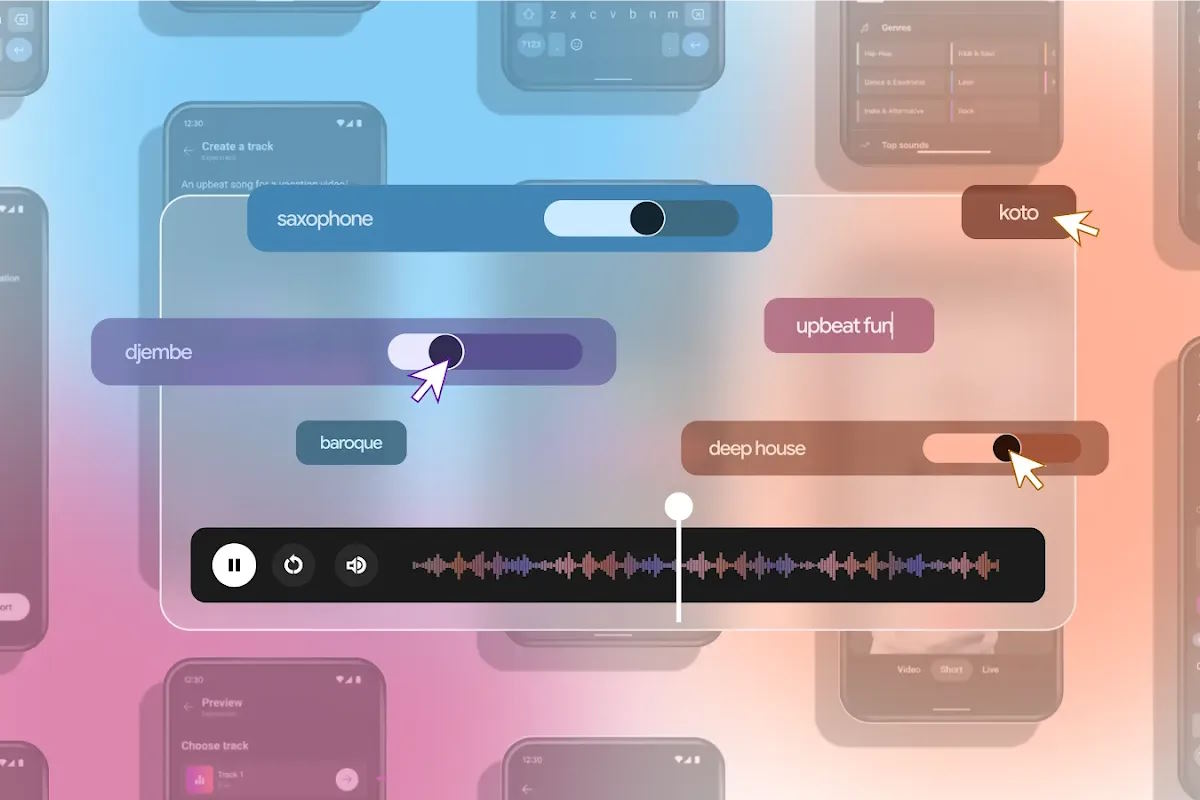
Google DeepMind has unveiled an updated version of MusicFX DJ, an AI-powered music production tool aimed at users with and without musical expertise. The company first showed off the software at this year's Google I/O event.
Instead of mixing pre-recorded tracks like regular DJ software, MusicFX DJ generates fresh music on the fly. Users simply type in what they want - like a specific genre, instrument, or mood - and the AI creates it instantly.
Google DeepMind says it has made two major improvements to the system. First, it can now stream music in real time by adapting what was previously an offline-only model. The software learns from what it has already created and the user's instructions to create the next section of music.
Second, users can now enter multiple prompts at different times to mix different musical elements, similar to how a DJ might layer tracks.
Video: DeepMind
MusicFX DJ produces studio-quality audio at 48 kHz stereo, a benchmark that competitor Udio reached in July with version 1.5. Users can export up to 60-second clips and share their sessions with others.
More precise control
Google DeepMind says the new version of MusicFX DJ gives users much more control over their music. Users can adjust instrumentation, insert musical breaks and create bass drops at will. The software also lets you adjust the speed and musical key while you're creating.
Meanwhile, Google is testing AI music features on YouTube with something called "Dream Track." The experiment lets creators in the U.S. create instrumental tracks just by typing what they want. Like all of Google's AI-generated content, these music tracks come with SynthID watermarks - the same technology Google recently started using for text.
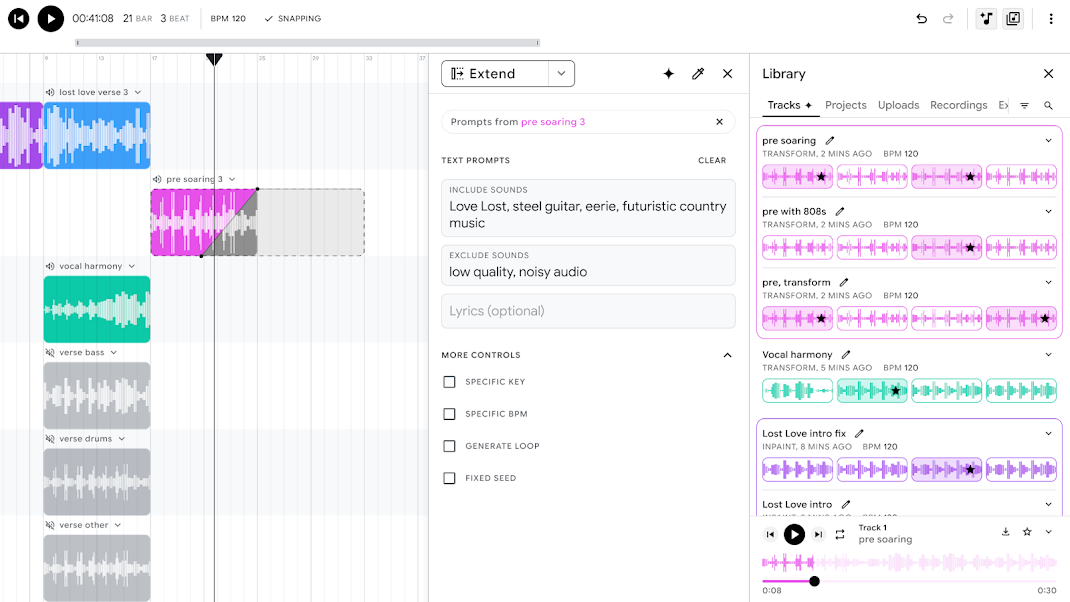
For now, these tools are not available to the general public. Only select testers have access to the Music AI Sandbox, and Dream Track is exclusive to U.S. creators. Google says it will roll out successful features to other products over time.
The music industry has backed the project through Google's "Music AI Incubator." Six-time Grammy winner Jacob Collier helped develop the tool, which he describes as a "real-time sonic putty" that creates surprising connections between unlikely musical elements.
AI music creation has taken off recently, with companies like Suno and Udio leading the charge. However, these startups are facing legal questions about copyright, which might explain why Google is taking such a careful approach with its own music tools.
AI News Without the Hype – Curated by Humans
As a THE DECODER subscriber, you get ad-free reading, our weekly AI newsletter, the exclusive "AI Radar" Frontier Report 6× per year, access to comments, and our complete archive.
Subscribe nowAI news without the hype
Curated by humans.
- More than 16% discount.
- Read without distractions – no Google ads.
- Access to comments and community discussions.
- Weekly AI newsletter.
- 6 times a year: “AI Radar” – deep dives on key AI topics.
- Up to 25 % off on KI Pro online events.
- Access to our full ten-year archive.
- Get the latest AI news from The Decoder.