Google's new open TranslateGemma models bring translation for 55 languages to laptops and phones
TranslateGemma shows how targeted training helps Google squeeze more performance out of smaller models: the 12B version translates better than a base model twice its size and runs on a regular laptop. With the growing Gemma family, Google is staking its claim in the race for open AI models.
What China can do, the US can do too: OpenAI has published a call for proposals to boost domestic AI hardware production. AI relies on a broad ecosystem of physical components beyond chips, OpenAI says. The company is seeking manufacturers and suppliers of data center components like cooling systems, power supplies, and networking equipment, plus consumer electronics and robotics. Applications are open through June 2026.
OpenAI has invested in Merge Labs, a startup developing brain-computer interfaces (BCIs). The company raised a total of $252 million in seed funding, according to Bloomberg. OpenAI CEO Sam Altman is a co-founder of Merge Labs. The exact size of OpenAI's investment remains unknown.
Merge Labs aims to combine biological and artificial intelligence to improve human capabilities. The startup is working on safer BCIs with higher bandwidth by combining biology, devices, and AI, according to OpenAI. OpenAI views BCIs as an important way for humans to interact more naturally with AI systems. The collaboration includes basic science models and tools to speed up research.
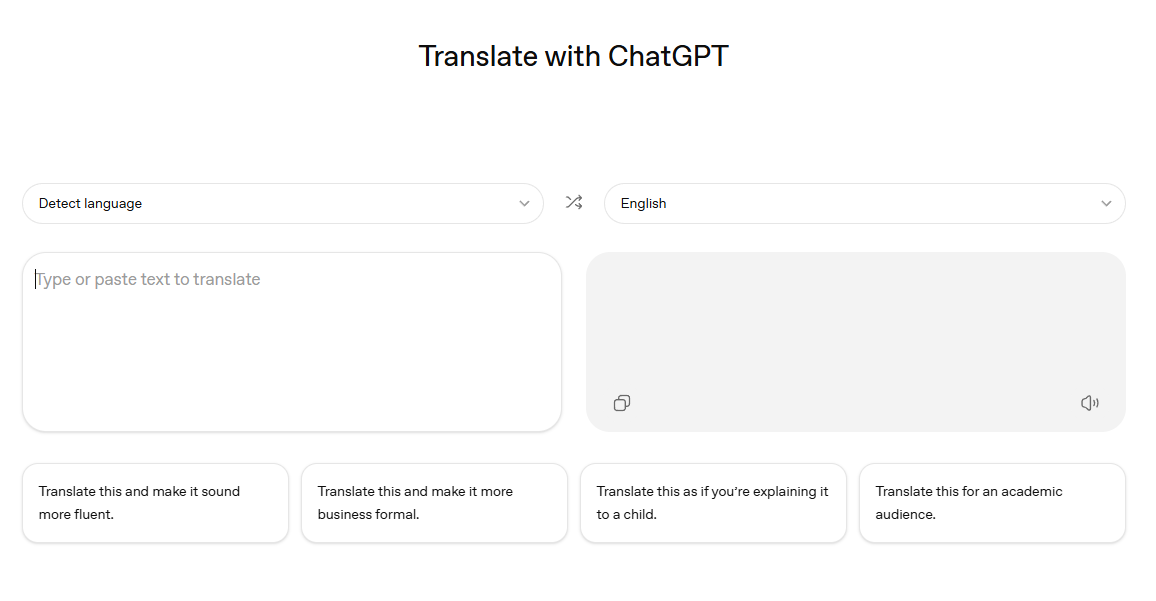
OpenAI has launched a standalone translation tool built on ChatGPT. "ChatGPT Translate" supports more than 25 languages with an interface similar to Google Translate or DeepL—two text fields with automatic language detection for the input.
OpenAI's ChatGPT Translate uses the familiar two-panel layout seen in other translation tools. | Screenshot: THE DECODER
Users can refine translations with additional prompts, for example, switching to a business tone or simplifying for children. These prompts redirect to the main ChatGPT interface, suggesting the tool is mainly designed as a gateway to the chatbot. OpenAI hasn't officially announced it yet.
Unlike full ChatGPT, the tool only handles text with apparent length limits. During testing, it sometimes returned chatbot responses asking for clarification instead of translations, with no way to respond. This suggests it's essentially a prompt in a new interface rather than a specialized translation model. For now, ChatGPT itself remains the more capable option.
The US AI industry continues to deliver drama. OpenAI has rehired three former employees from Mira Murati's AI startup Thinking Machines, including co-founder Barret Zoph, who was recently fired as CTO. Thinking Machines let Zoph go for "unethical conduct," according to journalist Kylie Robison, citing two sources.
A source speaking to Wired claims Zoph passed confidential company information to competitors. OpenAI, the company he's now returning to, would be the obvious candidate. OpenAI's product CEO Fidji Simo announced Zoph's return in an internal memo and on X, saying the company doesn't share Murati's concerns. According to Simo, his return had been "several weeks" in the making.