Why Meta CEO Mark Zuckerberg is willing to give away a $10 billion AI model

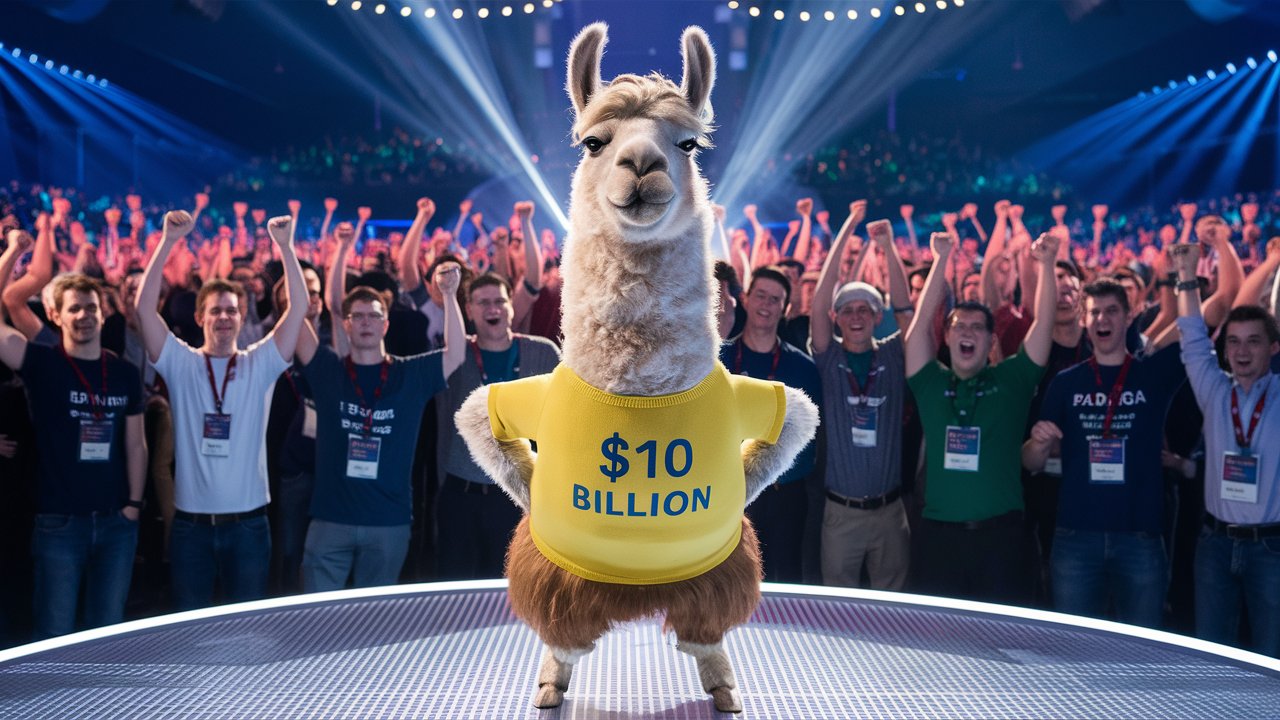
Meta CEO Mark Zuckerberg said he would be willing to open source a $10 billion AI model if it passes safety tests and benefits everyone involved.
Meta has a strong history in open source, with projects like PyTorch, React, and the Open Compute Project, Zuckerberg said in a recent podcast with Dwarkesh Patel.
By open-sourcing hardware designs through the Open Compute Project, Meta has expanded the supply chains around its designs, leading to price reductions and billions of dollars in savings for everyone involved, Zuckerberg said.
He believes a similar effect could happen with AI models, for example, if the community finds ways to make them run more efficiently.
Meta has just announced its latest open-source LLM Llama 3. The largest version, coming soon, can compete with the best closed-source models to date, such as GPT-4 and Claude 3, in synthetic benchmarks.
Dario Amodei, CEO of Anthropic, the company behind the Claude models, recently estimated that AI models could cost $5-10 billion to train and deploy in the coming years.
Open Source as a counterweight to proprietary APIs
Zuckerberg sees open source as a way to avoid dependence on a few companies that act as gatekeepers, deciding what developers can build with their AI models. He doesn't want Meta to be in that position, and he believes many developers don't want to be restricted by gatekeeper companies either.
Meta's CEO has previously said that open sourcing would improve Meta's models without reducing the differentiation of Meta's LLM-based products, since it still takes significant work to go from a model to a product.
However, Zuckerberg acknowledges that things get more complicated when the model itself becomes a product. In that case, the economic pros and cons of open sourcing would have to be carefully weighed, but he doesn't currently see Meta in that situation.
In a recent submission to the NTIA, Meta argues that open-source AI leads to better and safer products, faster innovation, and a larger market. Open models would democratize access to AI and create opportunities for everyone, not just technology giants. Meta advocates a "spectrum of openness" in which developers decide for themselves how to release their models.
AI News Without the Hype – Curated by Humans
As a THE DECODER subscriber, you get ad-free reading, our weekly AI newsletter, the exclusive "AI Radar" Frontier Report 6× per year, access to comments, and our complete archive.
Subscribe nowAI news without the hype
Curated by humans.
- Over 20 percent launch discount.
- Read without distractions – no Google ads.
- Access to comments and community discussions.
- Weekly AI newsletter.
- 6 times a year: “AI Radar” – deep dives on key AI topics.
- Up to 25 % off on KI Pro online events.
- Access to our full ten-year archive.
- Get the latest AI news from The Decoder.