Adobe Firefly now bundles 30+ AI models and lets users train custom styles on their own images

Key Points
- Adobe is expanding its AI platform Firefly with custom models: users can train a model using ten to 30 of their own images to consistently reproduce a specific visual style.
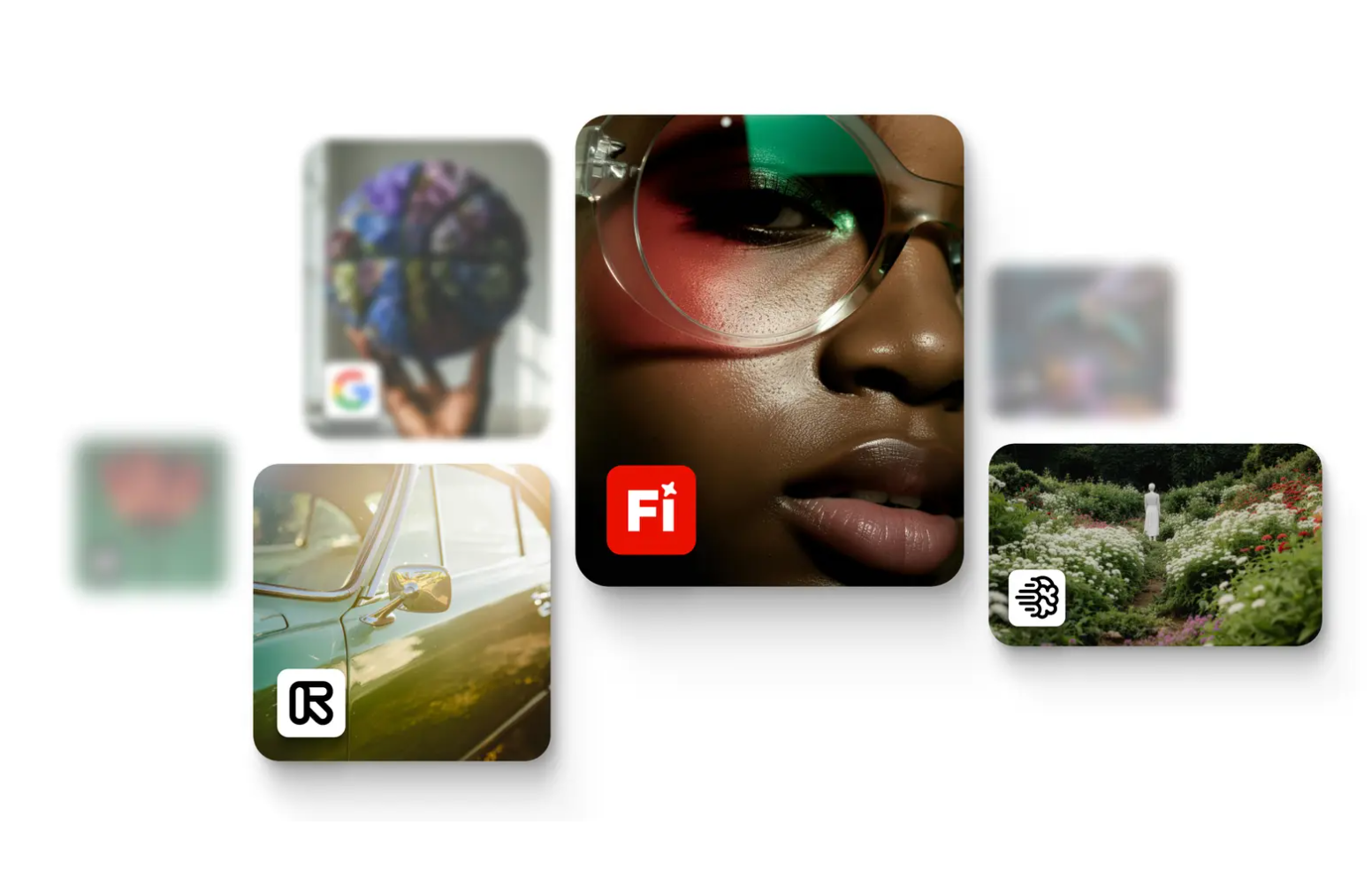
- Firefly now bundles over 30 AI models from providers such as Google, Runway, OpenAI, and Kling 2.5 Turbo in a single environment, allowing users to generate, refine, and compare results across different models with unlimited image and video generation, according to Adobe.
- With Project Moonlight, Adobe is developing conversation-based AI assistants that work across multiple apps. Users describe their goals in a chat, and the agents then carry out specific actions using Adobe's tools.
Adobe is expanding its AI creative platform, Firefly, to include user-defined models that can be trained on your own images. The company is also bundling over 30 AI models from different providers in a single environment.
Over the past few months, Adobe has been building out Firefly into a full-featured studio that combines models from multiple providers, its own editing tools, and conversation-based AI assistants in one place. The latest addition is custom models, now available as a public beta.
Users can now train their own reusable AI models
With Custom Models, users can train an AI model on 10 to 30 images (JPG or PNG) to capture a specific visual style. Adobe says the feature is optimized for three use cases. First, illustration styles where line weight, fills, and color consistency matter. Second, characters that need to look consistent across different scenes. And third, photographic looks that need to be replicated across large numbers of images.
The trained model is designed to preserve details like line weight, color palettes, lighting, and character features across generations. Once created, it can be reused across projects and campaigns. Models are private by default, and users own whatever content they generate with them.
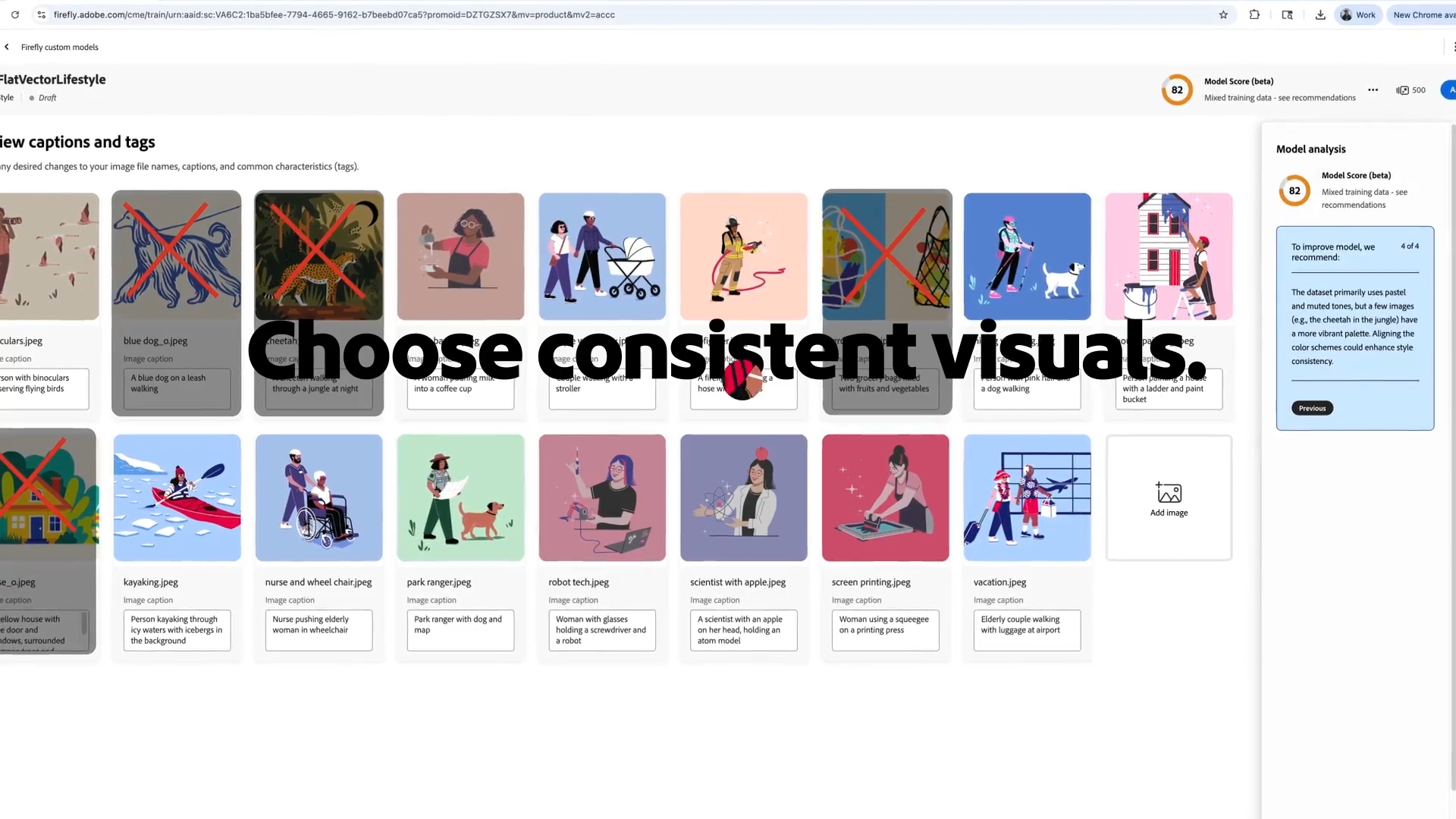
Adobe positions the feature as especially useful for teams that produce high volumes of content and need to keep things visually consistent. The company plans to refine it based on feedback from real-world workflows.
Custom models aren't entirely new; Adobe first announced the concept at the Adobe Summit 2024. Back then, the company showed off the ability to customize Firefly with 10 to 20 training images to match a brand's design language. The current public beta builds on that approach and fine-tunes it specifically for illustration, character design, and photographic styles.
Over 30 models from different providers, all in one place
Firefly now bundles more than 30 AI models in a single environment. Alongside Adobe's own Firefly Image Model 5, which is now generally available, the platform includes models from Google (Nano Banana 2 and Veo 3.1), Runway (Gen-4.5), and OpenAI. Adobe says the Kling 2.5 Turbo model is the latest addition.
The idea behind the platform strategy is that users can generate with one model, refine with another, and compare results side by side. Adobe says it currently offers unlimited video and image generation across all available models.
Project Moonlight turns prompts into conversations
Adobe is also pushing forward with conversation-based AI assistants. The company is rolling out agentic AI assistants across several products, including Photoshop, Express, and Acrobat. Users describe what they want in a chat, and the agents carry out specific actions using Adobe's tools.
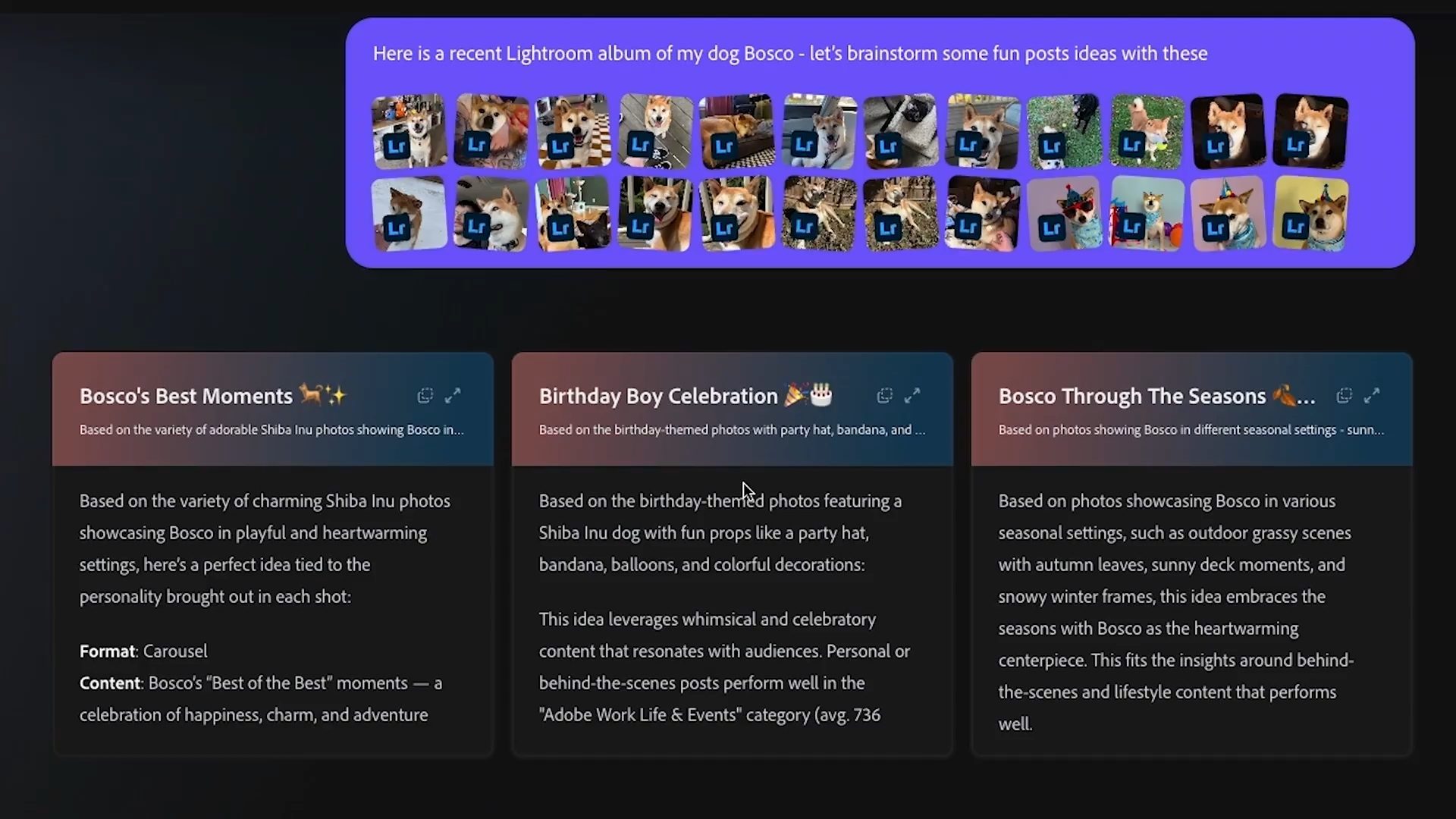
The broader initiative is called Moonlight, first shown at Adobe MAX 2025 in October. It's a conversation-based, agent-driven interface designed to work across multiple Adobe apps, built to learn a user's style and tap into their own assets and libraries. The project is currently in private beta, and Adobe is now expanding access via a signup form.
Since MAX, the company has been steadily expanding its offerings. In February, Adobe introduced Quick Cut, an AI editing feature that automatically turns raw footage into a structured first edit. Around the same time, Adobe integrated Photoshop, Acrobat, and Express directly into ChatGPT, letting users edit images and documents by typing text prompts in the chatbot.
AI News Without the Hype – Curated by Humans
As a THE DECODER subscriber, you get ad-free reading, our weekly AI newsletter, the exclusive "AI Radar" Frontier Report 6× per year, access to comments, and our complete archive.
Subscribe now