Sakana AI, a Tokyo-based startup founded by former Google AI experts Llion Jones and David Ha, has raised $30 million in seed funding. The round was led by Lux Capital and Khosla Ventures, with participation from NTT Group, KDDI CVC, Sony Group, and several other investors. The company aims to develop nature-inspired generative AI models capable of producing text, images, code, and multimedia content. Jones, who contributed to the development of the first Transformer architecture, and Ha, the former head of Google Research in Japan, seek to create AI systems that are sensitive and adaptive to changes in their environment, similar to natural systems with collective intelligence.
Most sovereign nations will want their own native foundational models, both for national security reasons and to better interact with regional dialects, cultures, and values. [...] Sakana AI is poised to leverage regional talent to harness the potential that this talent has.
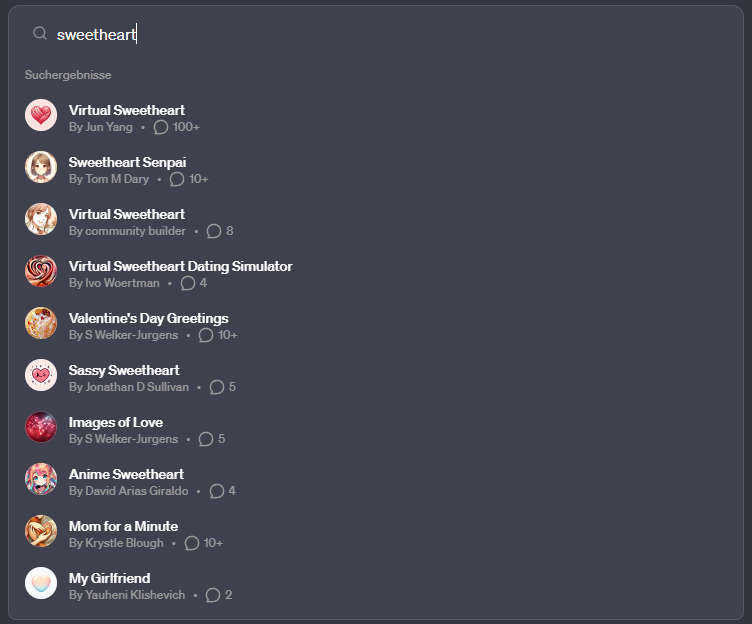
OpenAI's GPT store, which offers customized versions of ChatGPT, is already facing problems with users breaking the rules by creating "girlfriend" AI chatbots. These bots, such as "Korean Girlfriend," "Virtual Sweetheart," and "Your AI Girlfriend, Tsu✨," violate OpenAI's usage policy, which prohibits GPTs "dedicated to fostering romantic companionship or performing regulated activities." OpenAI uses a combination of automated systems, human review, and user reports to find and evaluate GPTs that may violate its policies. Virtual companions aren't new, see character.ai, and not a bad thing per se. But as Quartz points out, it only took two days for users to break these rules. I wonder what this means for OpenAI's promise to block GPTs from being used for election propaganda.
Recently, OpenAI announced the ChatGPT team plan with support for "GPT-4 32K". Support for GPT-4 32K was surprising, as there is already GPT-4 Turbo with 128K, a newer model that has been in use since November and offers a four times larger context window. The context window indicates how much information the model can process simultaneously. According to an OpenAI spokesperson, the information in the announcement is correct: the models in ChatGPT Teams and Plus are 32K versions of the Turbo model. OpenAI refers to GPT-4 in the announcement but means GPT-4 Turbo. OpenAI only differentiates between turbo and non-turbo for the API. The 128K Turbo model is available in the Enterprise version for ChatGPT and via the API.
Chinese chipmakers are participating in group tours to network with Japanese counterparts amid increasingly strict export controls imposed by the US and its allies. The tours provide access to Japanese chip companies and semiconductor trade fairs, such as Semicon Japan and Nepcon Japan, the FT reports. Chip Think Tank, a consulting firm backed by Tianfeng Securities, is offering an eight-day trip in January to explore Japan's semiconductor equipment and materials industry. The trip includes a trade show ticket and visits to more than 10 Japanese chip industry players. These networking tours have gained popularity as Chinese chipmakers seek ways to cope with Washington's tightening of export controls aimed at curbing China's advances in semiconductor technology.