The Japan Times tested AI-assisted tools for Japanese-to-English translation, pitting ChatGPT with GPT-4 against Bing, Bard, and DeepL to determine which one best-understood context and translated accurately into natural English. A bilingual senior editor from TJT evaluated the results.
The test involved translating literature, song lyrics, and a speech from Japanese to English. GPT-4 scored highest overall, closely followed by Bard and Bing, although it struggled to translate the subject matter of the literature sample. DeepL consistently scored the lowest. AI chatbots can produce varying results based on factors such as device, timing, and phrasing, but ChatGPT-4 consistently offers the highest quality, according to language expert Tom Gally of the University of Tokyo.
Wix, the template-based website builder, has revealed plans to allow users to create entire websites by typing a description into a box and answering several questions. The AI Site Generator feature goes beyond templates, using a combination of ChatGPT for text creation and Wix's own AI tools for design to create professional-looking websites that are more accessible than before. While it looks impressive, questions remain about how much direct control users will have and who's responsible for potential copyright infringement lawsuits. See the video for a quick demo.
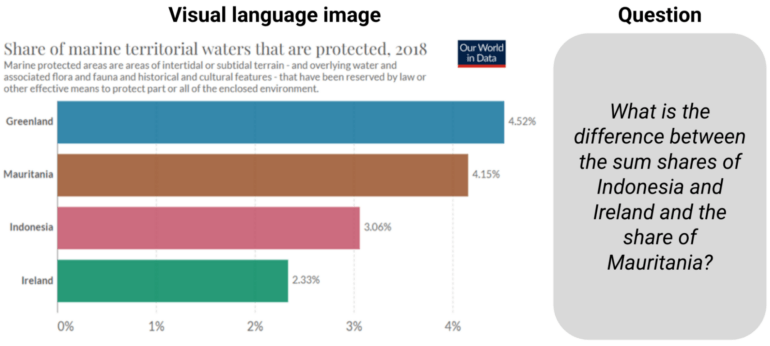
Google's MatCha is a foundation model trained for both chart de-rendering and mathematical reasoning. Chart de-rendering explores the reverse engineering of charts, plots, or graphics to reveal their underlying data table or code, while math reasoning seeks to solve question-based problems on textual mathematical datasets. By combining these tasks, MatCha significantly outperforms existing models for visual language understanding of charts. The researchers also proposed DePlot, a model built on top of MatCha for improved reasoning on charts through translation to tables.